Tokyo has two big teamLab digital art museums, and most visitors only have time for one. They feel very different, so the right choice depends on who you are traveling with.
This post contains affiliate links. We may earn a commission if you book through them. How we make money.
Quick answer
Choose teamLab Planets in Toyosu for a set route of big, immersive rooms you walk through barefoot, including knee-deep water. It is the more intense, photogenic experience and takes about 1.5 to 2 hours. Choose teamLab Borderless at Azabudai Hills for a huge maze of rooms with no map, where artworks move between spaces; it suits people who like to explore, takes 2 to 3 hours and keeps your shoes on. Adult tickets start from roughly ¥3,400 to ¥3,800 and vary by date, and both sell out in busy periods, so book online.
Side-by-side comparison
| teamLab Planets | teamLab Borderless | |
|---|---|---|
| Location | Toyosu, Shin-Toyosu Station (Yurikamome Line) | Azabudai Hills, near Kamiyacho Station (Hibiya Line) |
| Layout | Fixed route through large installations | Open maze with no map and no set route |
| Shoes | Barefoot; you wade through water | Shoes on |
| Time needed | About 1.5–2 hours | About 2–3 hours |
| Adult ticket | From about ¥3,600–¥3,800 | From about ¥3,400–¥3,800, more at peak |
| Child (4–12) | About ¥1,500 | About ¥1,500 |
| Feels like | A sensory journey | A treasure hunt |
| Open until | Currently scheduled to the end of 2027 | Permanent |
Prices are dynamic and change with the date and time slot, so check the official sites for your day. Under-4s are free at both.
teamLab Planets
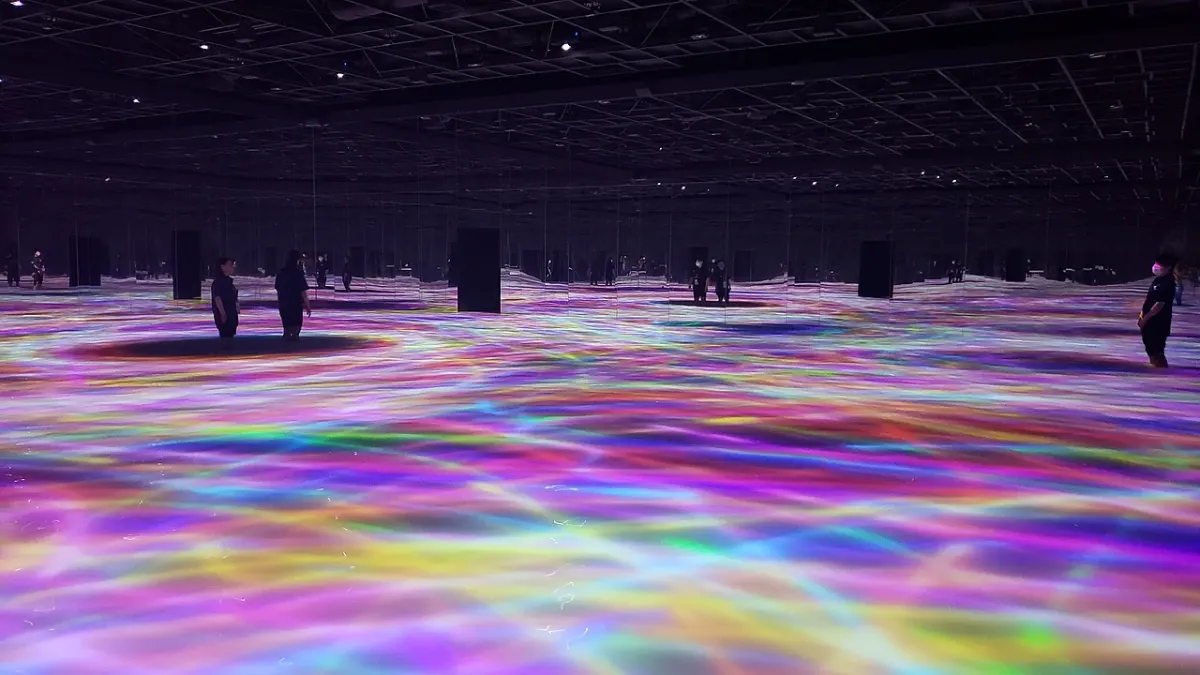
Planets is designed to be experienced with your whole body. You leave your shoes and bags in lockers, roll up your trousers and walk barefoot through a series of large spaces: a soft floor that swallows your steps, a dark room of floating koi fish projected onto water up to your knees, a room of hanging lights reflected endlessly in mirrored floors, and giant balloon-like spheres that change color as you push them. There is also a garden area with a floating orchid installation and a moss garden.
Good to know: wear shorts or trousers that roll up above the knee. Mirrored floors make skirts a poor choice; the museum lends shorts but you will be more comfortable in your own. Towels are provided. Some areas are dark and crowded, so it is not ideal for anyone uncomfortable in tight spaces. Planets sells no tickets at the door.
teamLab Borderless
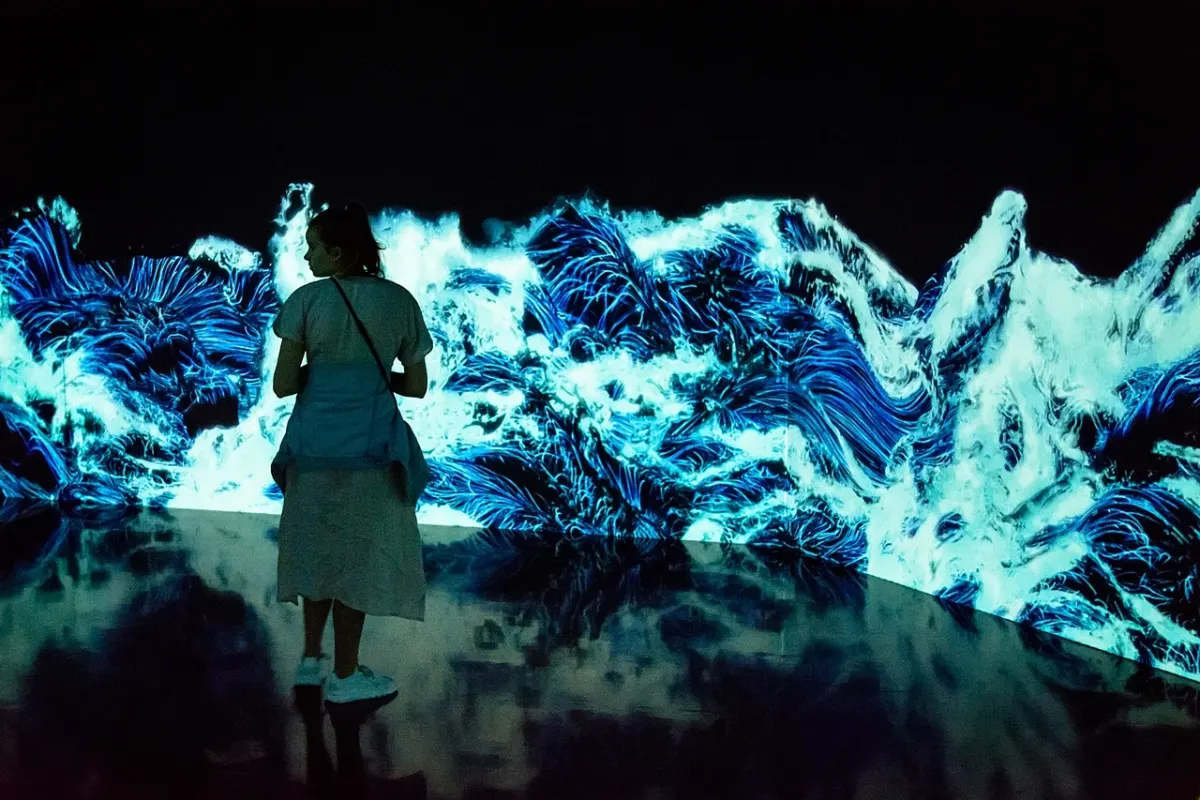
Borderless reopened in 2024 in the new Azabudai Hills development, near Roppongi and Tokyo Tower. It is a vast, dark complex of connected rooms where artworks drift from one space to another and interact with each other and with you. There is no map and no fixed route, so you can easily miss rooms if you do not wander.
Highlights include the Bubble Universe, a room of glowing spheres that change as you move; the Lamp Forest, where lamps ripple with color; and rooms of waterfalls and flowers flowing across walls and floors. A small tea house serves green tea in which digital flowers bloom, for an extra charge.
Good to know: keep your shoes on. Strollers are not allowed inside, and tripods and selfie sticks are banned. There is no re-entry once you leave. Borderless may sell tickets at the door when slots remain, for a small surcharge, but do not count on it.
Which one for you?
- First visit, one choice only: Planets. The route is clear and every room is a showstopper.
- Families with small children: Planets for wow factor (bring a change of clothes), or Borderless if you have a stroller-age child you can carry and want to avoid water.
- Photographers and Instagrammers: both are excellent; Planets’ mirrored rooms are the most famous shots.
- People who like to explore at their own pace: Borderless.
- Limited mobility: Borderless is easier, with much of it accessible; contact the museum in advance.
- Return visitors: if you saw Planets on a previous trip, go to Borderless.
Ready to book?
Compare time slots and ticket prices for teamLab Planets and Borderless.
Rainy day? Both museums are fully indoors, which makes them one of the best wet-weather plans in Tokyo. That also means rainy days and the June rainy season sell out faster, so book as soon as the forecast turns. In the summer heat, the air-conditioned halls of Borderless are a welcome break, while the water rooms at Planets feel refreshing.
Tickets and timing
Both museums use timed entry. Tickets are usually released about two months ahead, around the start of each month, and popular slots on weekends, Japanese holidays and during cherry blossom season can sell out weeks ahead. Weekday evenings are usually easiest to book. Planets tickets can be changed a limited number of times up to two hours before entry but not refunded; official Borderless tickets cannot be canceled.
| Slot | Crowds | Notes |
|---|---|---|
| First slot of the day | Low | Best for photos with fewer people |
| Weekday afternoon | Medium to high | School and tour groups |
| Weekday evening | Medium | Good balance; combine with dinner nearby |
| Weekend midday | Highest | Book early or avoid |
Tips for your visit
- Arrive 10 to 15 minutes before your slot; entry is by time window, and queues build at the start of each slot.
- Use the lockers; carrying bags through the water rooms at Planets is impractical.
- Charge your phone. You will take far more photos and videos than you expect.
- Combine Planets with Toyosu Market for an early sushi breakfast, or with Odaiba’s waterfront on the same Yurikamome line.
- Combine Borderless with Tokyo Tower, Roppongi Hills or the Azabudai Hills shops and food hall.
- Traveling to Kyoto too? teamLab also runs a newer large-scale museum there, teamLab Biovortex Kyoto, near Kyoto Station.
Can’t decide? If you can spare four hours and about ¥7,000, do both on different days. They are different enough that seeing one does not spoil the other.
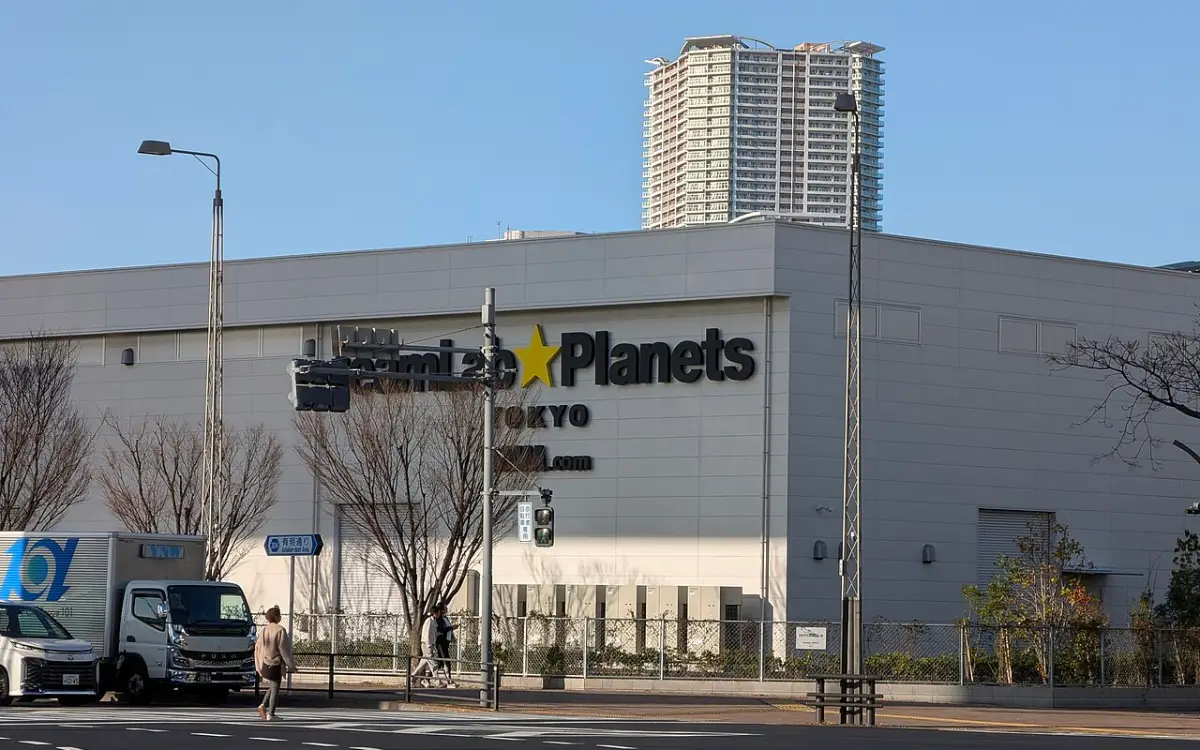
Photo: teamLab Toyosu by Syced, CC0, via Wikimedia Commons.
More photos: teamLab Borderless, Odaiba by Domenico Convertini, CC BY-SA 2.0; teamLab Planets Tokyo by Sasa0403, CC BY-SA 4.0. Via Wikimedia Commons.