Your flight is usually the single biggest cost of a Japan trip. A few choices about dates, airports and search tools can easily save you a few hundred dollars per person.
This post contains affiliate links. We may earn a commission if you book through them. How we make money.
Quick answer
Book economy two to five months ahead, fly midweek, and avoid late March to early April, Golden Week, August and late December. Compare Tokyo Haneda, Tokyo Narita and Osaka Kansai, and consider flying into one and out of the other. Use a flexible-date search, set price alerts, and check one-stop routes via hubs such as Seoul, Taipei, Hong Kong or Vancouver.
Typical fares by departure country
| From | Good deal | Typical | Peak season |
|---|---|---|---|
| US West Coast (LA, SF, Seattle) | Under $750 | $850–$1,300 | $1,500+ |
| US East Coast and Midwest | Under $950 | $1,050–$1,600 | $1,800+ |
| Canada (Vancouver, Toronto) | Under C$1,100 | C$1,200–C$1,900 | C$2,200+ |
| London | Under £650 | £700–£1,100 | £1,300+ |
| Sydney or Melbourne | Under A$900 | A$1,000–A$1,700 | A$2,000+ |
These ranges are a guide based on typical fares and change with fuel prices, exchange rates and demand. Treat anything in the “good deal” column as worth booking quickly.
When to fly and when to book
Cheapest months: mid-January to early March (excluding Lunar New Year peaks on some Asian routes), June, and from mid-September to mid-November, except autumn weekends.
Most expensive: late March to early April for cherry blossoms, Golden Week (around April 29 to May 5), mid-July to August, and the Christmas and New Year period.
When to book: for most routes, the best prices appear two to five months before departure. For cherry blossom season, book six to nine months ahead and choose a fare you can change. Last-minute deals to Japan are rare.
Day of the week: departing and returning on a Tuesday or Wednesday is often cheaper than weekends, sometimes by $100 or more.
Which airport to fly into
- Tokyo Haneda (HND): 30 minutes from central Tokyo. Usually a little more expensive, but saves time and train fares.
- Tokyo Narita (NRT): about an hour from the city. More low-cost carriers and often cheaper fares.
- Osaka Kansai (KIX): the gateway for Kyoto, Osaka and Hiroshima. Sometimes cheaper than Tokyo from Asia-Pacific hubs.
- Others: Nagoya (NGO), Fukuoka (FUK) and Sapporo (CTS) have fewer long-haul flights but can work with a connection.
An “open-jaw” ticket into Tokyo and out of Osaka often costs the same as a simple return and saves you a day of backtracking. Search it as a multi-city trip.
Airlines and routes to compare
Direct flights: Japan Airlines and ANA fly non-stop from many cities in the US, Canada, the UK, Europe and Australia, alongside United, American, Delta, Air Canada, British Airways, Qantas and others. Direct flights save time but are rarely the cheapest.
One-stop options: Korean Air and Asiana via Seoul, EVA Air and China Airlines via Taipei, Cathay Pacific via Hong Kong, Singapore Airlines via Singapore, and Middle Eastern carriers from Europe can undercut direct fares. A short layover adds only a few hours.
From Australia: Jetstar’s low-cost flights, plus Qantas, JAL and ANA, compete on Sydney, Melbourne, Brisbane and Cairns routes, which keeps fares down.

Search tricks that work
- Use a calendar or flexible-date view. Moving your trip by two or three days can change the fare dramatically.
- Search “Tokyo (all airports)” instead of a single airport, and compare with Osaka.
- Set price alerts for your dates a few months ahead and book when the fare drops into the “good deal” range.
- Check nearby departure airports. A short domestic flight or drive to a bigger hub can unlock much cheaper long-haul fares.
- Compare the airline’s own site. Once you find a fare on a search engine, check the airline directly; booking direct makes changes easier.
- Read the fare rules. Basic economy may exclude seat selection, checked bags or changes, which can wipe out the savings.
Start your search
Compare fares to Tokyo and Osaka across airlines with a flexible-date calendar.
Low-cost carriers: worth it?
Low-cost long-haul airlines, such as Zipair from North America or Jetstar from Australia, can be much cheaper on paper. Add up the real cost before booking: checked bags, seat selection and meals are all extra, and changes can be expensive. For a two-week trip with a checked bag, the difference against a full-service airline is often smaller than it first appears, but it can still be worth it if you pack light.
Using points and miles
If you collect airline or credit card points, Japan is one of the best places to use them. Award seats on JAL and ANA can be booked through partner programs in the oneworld and Star Alliance networks. Saver award space opens roughly 11 to 12 months ahead and goes fast for spring and autumn, so plan early if you are hoping to fly in business class on points.
Once your flights are booked, see our two-week Japan budget to plan the rest of your spending.
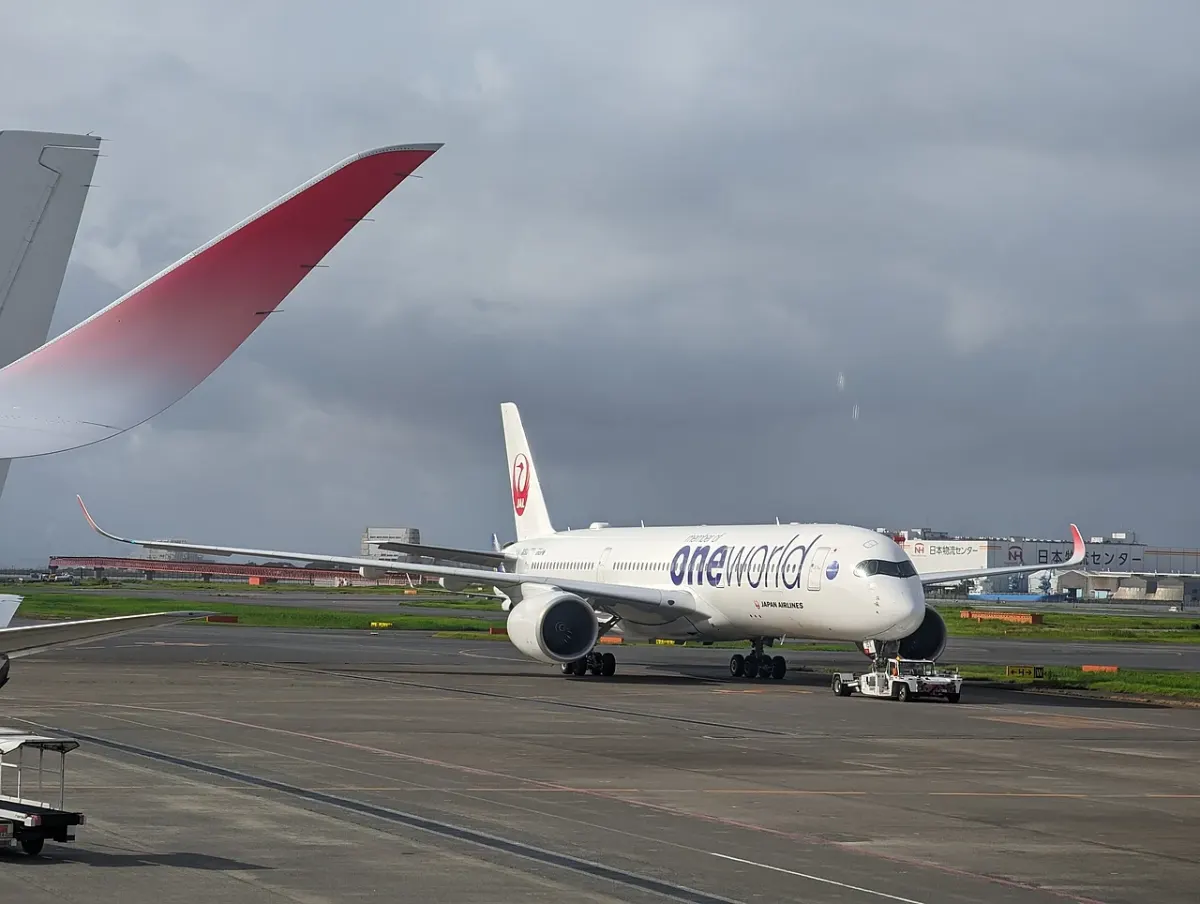
Photo: Haneda Airport by Syced, CC0, via Wikimedia Commons.
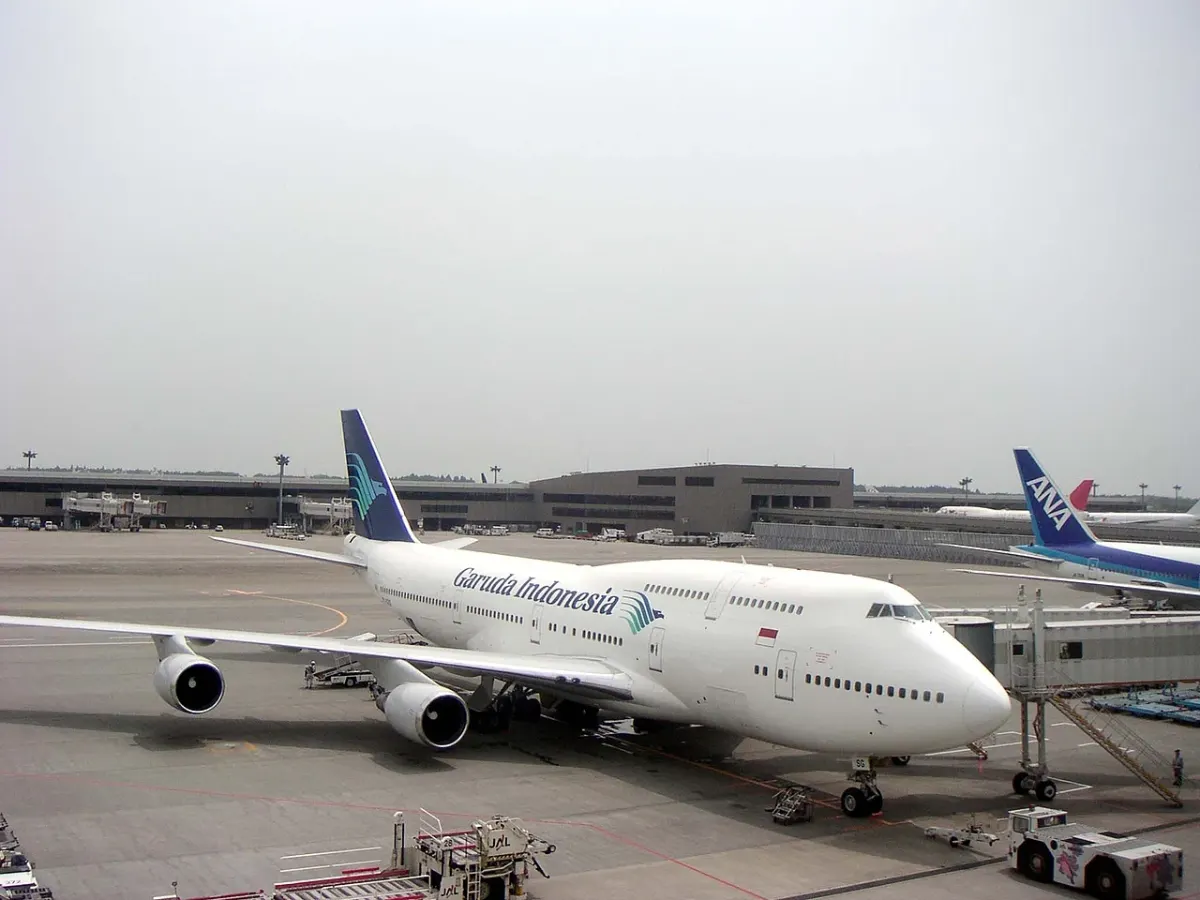
More photos: Haneda airport 4 by Syced, CC0; Garuda Indonesia B747-4U3 at Narita International Airport, CC BY-SA 3.0. Via Wikimedia Commons.