Japan’s door-to-door delivery services will carry your suitcase from one hotel to the next, usually by the following day, for about the price of a nice lunch. It is the single best travel hack for a multi-city trip.
This post contains affiliate links. We may earn a commission if you book through them. How we make money.
Quick answer
Ask your hotel front desk to send your suitcase with takkyubin (Yamato’s TA-Q-BIN or a similar service) to your next hotel. A standard large suitcase costs roughly ¥2,500 to ¥3,500 for Tokyo to Kyoto and usually arrives the next day, so send it the evening before or the morning of the day before you need it. Travel with a small overnight bag in the meantime.
What takkyubin is
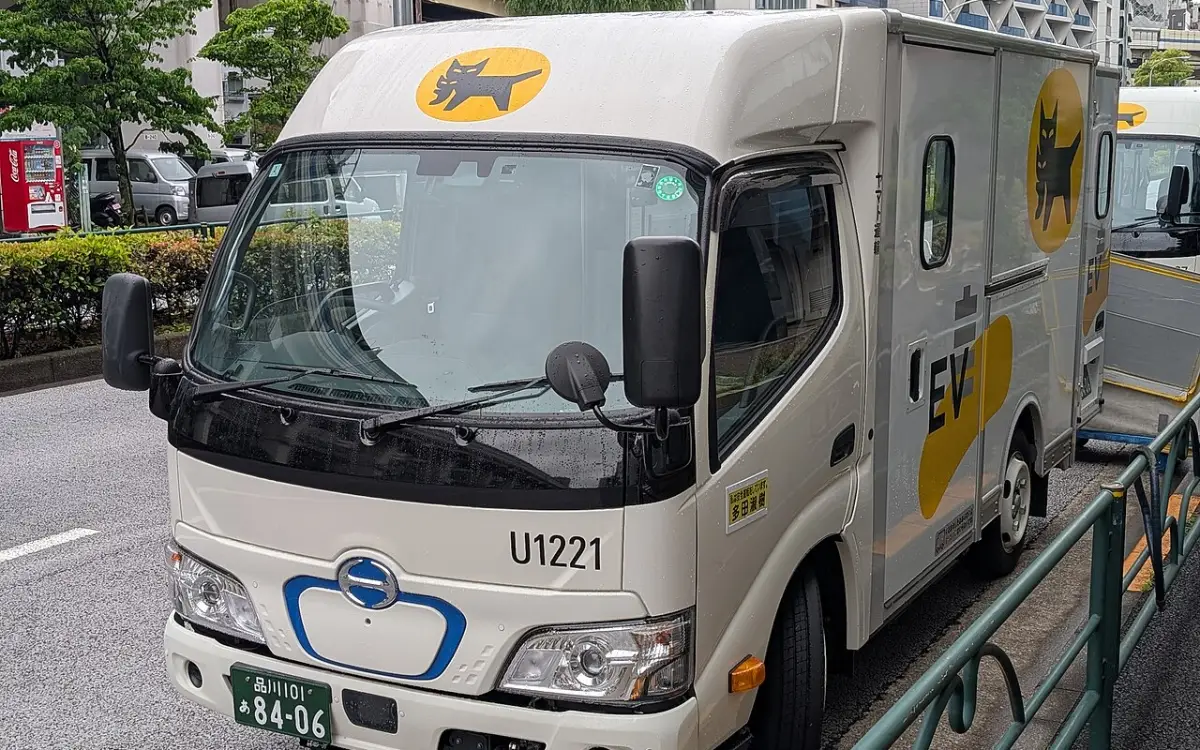
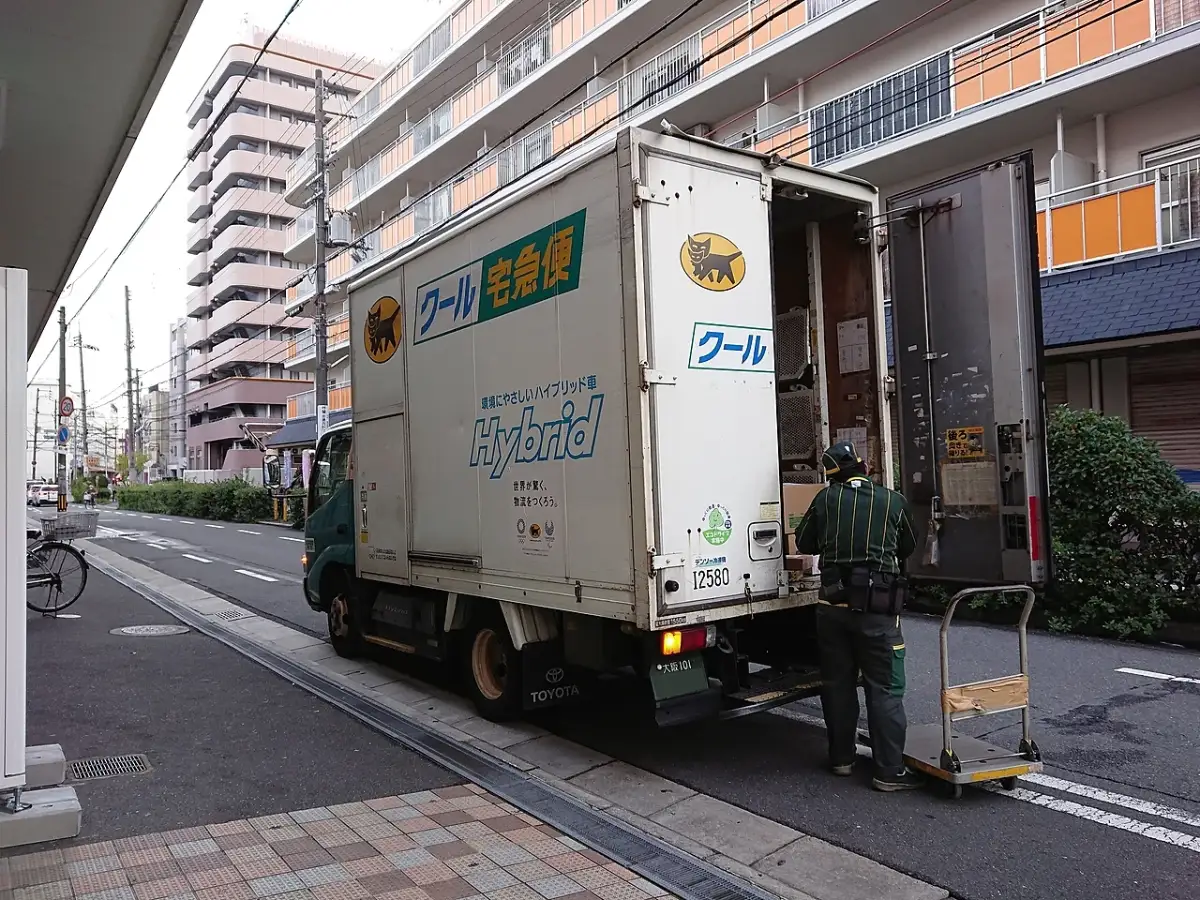
Takkyubin is the Japanese word for door-to-door parcel delivery, made famous by Yamato Transport, the company with the black cat logo, which calls its service TA-Q-BIN. Sagawa Express and Japan Post (Yu-Pack) offer the same thing. Japanese people use it constantly to send golf bags, ski equipment and luggage ahead of a trip, so hotels, convenience stores and airports are all set up for it.
Why use it? Shinkansen luggage space is limited, and bags over 160 cm in total dimensions need a special reserved seat. Stations have long stairways and crowded platforms. And small hotels, ryokan and old towns are much easier to enjoy without dragging a suitcase over cobblestones.
How much it costs
The price depends on the size (length + width + height) and weight of the bag, and the distance.
| Suitcase size | Tokyo → Tokyo area | Tokyo → Kyoto/Osaka | Tokyo → Hokkaido/Kyushu |
|---|---|---|---|
| Carry-on (up to 120 cm) | ¥1,500–¥2,000 | ¥1,800–¥2,500 | ¥2,500–¥3,500 |
| Medium (up to 140 cm) | ¥2,000–¥2,500 | ¥2,300–¥3,000 | ¥3,000–¥4,000 |
| Large (up to 160 cm) | ¥2,300–¥2,800 | ¥2,700–¥3,500 | ¥3,500–¥4,500 |
| Extra large (up to 200 cm) | ¥3,000–¥4,000 | ¥3,500–¥5,000 | ¥4,500–¥6,500 |
These are rough figures; carriers adjust prices regularly, and dropping the bag at a service counter rather than having it collected can be slightly cheaper. Payment is usually in cash at the hotel desk, though some counters take cards and IC cards.
How to send a suitcase, step by step
- Ask at the front desk. Say you want to send your bag to your next hotel by takkyubin. Most hotels handle this every day and have the forms ready.
- Fill in the delivery slip. You need the receiving hotel’s name, address and phone number, your name as it appears on the booking, and your check-in date. Write “guest arriving on [date]” in the notes. The hotel staff often help.
- Choose the delivery date. Pick the day of your check-in, or the day before if the hotel agrees to hold it.
- Pay and keep the receipt. It has the tracking number, which you can check online in English.
- Pick up at your next hotel. The bag is usually waiting at the desk or already in your room.
No front desk? Convenience stores such as 7-Eleven and FamilyMart accept parcels, as do Yamato service centers. You will need to fill in the slip yourself, so have the address of your next hotel ready, ideally in Japanese.
Sending bags to and from the airport
From the airport on arrival: Narita, Haneda and Kansai airports all have delivery counters in the arrivals hall. Send your big bags to your hotel and take the train into the city with just a backpack. Delivery is usually the next day, so keep what you need for the first night with you.
To the airport before you fly: send bags from your last hotel to the airport counter of your departure terminal, usually two days before your flight. You collect them at the counter before check-in. Check the counter’s opening hours if you have an early flight.
Same-day services: in some cities, services such as Yamato’s same-day hands-free delivery can take bags from a station or airport to your hotel by the evening. Check availability for your route, as same-day delivery covers only certain areas.
Want to book online?
Some services let you book luggage delivery in English in advance.
Timing: when to send
| Route | Usually arrives |
|---|---|
| Within Tokyo, Kyoto–Osaka | Next day |
| Tokyo → Kyoto/Osaka | Next day |
| Tokyo → Hiroshima, Kanazawa | Next day |
| Tokyo → Hokkaido, Kyushu, Okinawa | 1–3 days |
| Remote areas, small islands | 2–4 days |
A useful rule: send the bag the morning before you move, or the evening before at the latest, and you will normally find it at your next hotel. Delivery can be delayed during Golden Week, New Year and heavy snow.
One-night stops: if you are only staying one night somewhere, such as a Hakone ryokan, send your big bag straight from Tokyo to the hotel after that, and pack an overnight bag for the ryokan.
Tips and rules
- Size and weight limits: most carriers accept bags up to 200 cm in total dimensions and around 25 to 30 kg.
- No valuables or fragile items: keep passports, cash, electronics, medicines and anything you need for the next 24 hours in your hand luggage.
- No dangerous goods: lithium batteries in power banks, spray cans and alcohol over certain limits may not be sent.
- Lock your bag and attach a name tag. Bags are handled carefully, but scratches can happen.
- Tell your next hotel. Most will receive bags before you arrive, but some small ryokan and apartments cannot. Send them a message or ask your current hotel to call.
- Insurance: carriers include basic compensation for loss or damage, but limits are low. Your travel insurance may cover more.
Once you have tried traveling hands-free in Japan, you will not want to go back. Combine it with a Tokyo–Kyoto–Osaka itinerary and you will only carry your suitcase on arrival and departure day.
Photo: Yamato delivery truck by Syced, CC0, via Wikimedia Commons.
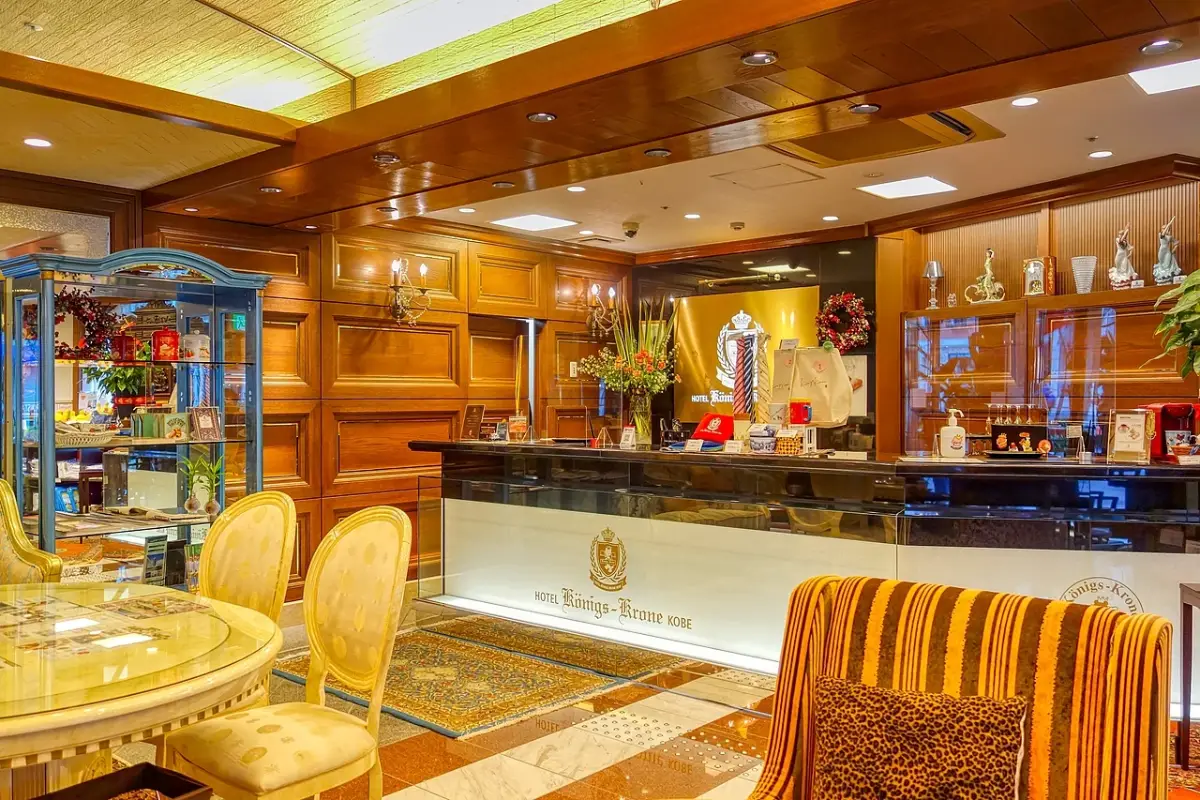
More photos: Yamato Transport truck by Rebirth10, CC BY 3.0; Hotel Königs-Krone Kobe front desk and lobby by J o, CC BY-SA 4.0. Via Wikimedia Commons.