The Camino de Santiago can be one of the cheapest long trips in Europe, or a comfortable inn-to-inn holiday with your bags carried for you. Here is what each style costs, and how luggage transfer works.
This post contains affiliate links. We may earn a commission if you book through them. How we make money.
Quick answer
Walking and sleeping in public albergues costs about €25 to €30 a day; private albergues and pilgrim menus push it to €35 to €45; private rooms and hotels to €60 to €100 or more. Luggage transfer services carry your bag to the next night’s stop for about €6 to €8 per bag per stage; you book the evening before and leave an envelope with the cash at reception. A self-guided package with hotels, breakfasts and luggage transfer for the popular last 100 km from Sarria usually costs several hundred euros per person for a week.
Daily budget by travel style
| Style | Sleep | Typical day |
|---|---|---|
| Shoestring | Public (municipal) albergues, cooking some meals | About €25–30 |
| Standard pilgrim | Private albergues, pilgrim menus | About €35–45 |
| Comfortable | Private rooms in albergues, pensiones, casas rurales | About €60–80 |
| Hotels and luggage transfer | Hotels with private bathrooms, bags carried | About €90–150 |
These figures cover the walking days only. Add travel to the start, your pilgrim gear, rest days in cities and the trip home. Costs are a little higher on the Camino del Norte and in big cities like Pamplona, Burgos and León.
Accommodation costs
Public albergues are run by towns, regions or parishes and are reserved for pilgrims with a credencial (pilgrim passport). A bunk in a shared dormitory usually costs about €10 to €12; public albergues in Galicia are €10. Most do not take reservations, so beds go first come, first served, and you usually leave by 8 am.
Private albergues cost about €15 to €20 a bed. Many can be booked, offer smaller dorms, washing machines and communal dinners, and some have private rooms for €35 to €60.
Donativo albergues ask for a donation instead of a fixed price. Give what you can afford, ideally similar to a public albergue.
Pensiones, casas rurales and hotels cost from about €40 to €100 or more for a double, more in Santiago and in the busy summer months.
Food and other daily costs
| Item | Typical price |
|---|---|
| Coffee and toast or a croissant | About €3–5 |
| Bocadillo (sandwich) for lunch | About €5–8 |
| Menú del peregrino (three courses with wine) | About €12–16 |
| Communal dinner in an albergue | About €10–15 or donation |
| Supermarket picnic | About €5–8 |
Other small costs add up: laundry (about €3 to €5 per machine load), blister plasters, sunscreen, the credencial (a few euros) and the odd museum or cathedral entry. The Compostela certificate in Santiago is free; you need to walk at least the last 100 km (or cycle 200 km) and collect stamps along the way, usually two a day on the final stretch.
How luggage transfer works
Luggage transfer, often called backpack transport or mochila service, means you walk with a light daypack while a van moves your main bag. It is available on the Camino Francés, the Portuguese Way, the Camino del Norte and other popular routes.
- Book the evening before online, by app or with a phone call, or take an envelope from your albergue or hotel.
- Write your name, phone and next address on the envelope, put the cash inside and tie it to your bag.
- Leave the bag at reception before the pickup time, usually around 8 am.
- Collect it at your next stop in the afternoon.
Expect about €6 to €8 per bag per stage, with discounts for booking several stages. Bags usually have a weight limit of around 15 to 20 kg. The Spanish postal service Correos runs a well-known service, and several private companies cover the main routes. Note that some public albergues do not accept bags sent by transfer, so check before relying on them, or stay in private albergues and hotels.
Want it all arranged?
Compare self-guided Camino packages with hotels, breakfasts and luggage transfer.
Self-guided packages
A self-guided package books your hotels for each night, moves your luggage every day and gives you maps and a support phone line. You still walk alone or with your group, at your own pace. Packages remove the daily worry of finding a bed in busy months, especially from May to September and on the final 100 km from Sarria, which is crowded.
For the Sarria to Santiago section, about 115 km in five or six walking days, a self-guided package usually costs several hundred euros to over €1,000 per person, depending on hotel standard, season and whether dinners are included. Single rooms cost extra.
Total trip costs
| Route | Walking days | Albergue budget | Hotels with luggage transfer |
|---|---|---|---|
| Sarria to Santiago (last 100 km) | 5–6 | About €150–250 | About €500–900 |
| Porto to Santiago (Portuguese Way) | 10–13 | About €350–550 | About €1,000–1,800 |
| Full Camino Francés from Saint-Jean | 30–35 | About €1,000–1,500 | About €3,000–5,000 |
Add flights, trains or buses to the start and home again. Santiago has an airport with flights from Madrid, Barcelona and several European cities, and trains connect it with Madrid in about five hours.
Ways to save
- Walk in spring or autumn, outside July and August, when private rooms are cheaper and easier to find.
- Shop at supermarkets for breakfast and lunch, and have the pilgrim menu for dinner.
- Share private rooms with walking companions.
- Buy good shoes and socks before you go; blisters can cost you rest days.
- Get travel insurance that covers hiking and trip interruption.
Insurance for long walks
Check that your policy covers walking, medical costs and trip interruption across Spain and Portugal.
However you walk it, the Camino gives remarkable value. Even with a bag transfer and a private room every night, you are paying for a month of slow travel through Spain’s villages, vineyards and mountains, ending at one of Europe’s great cathedrals.
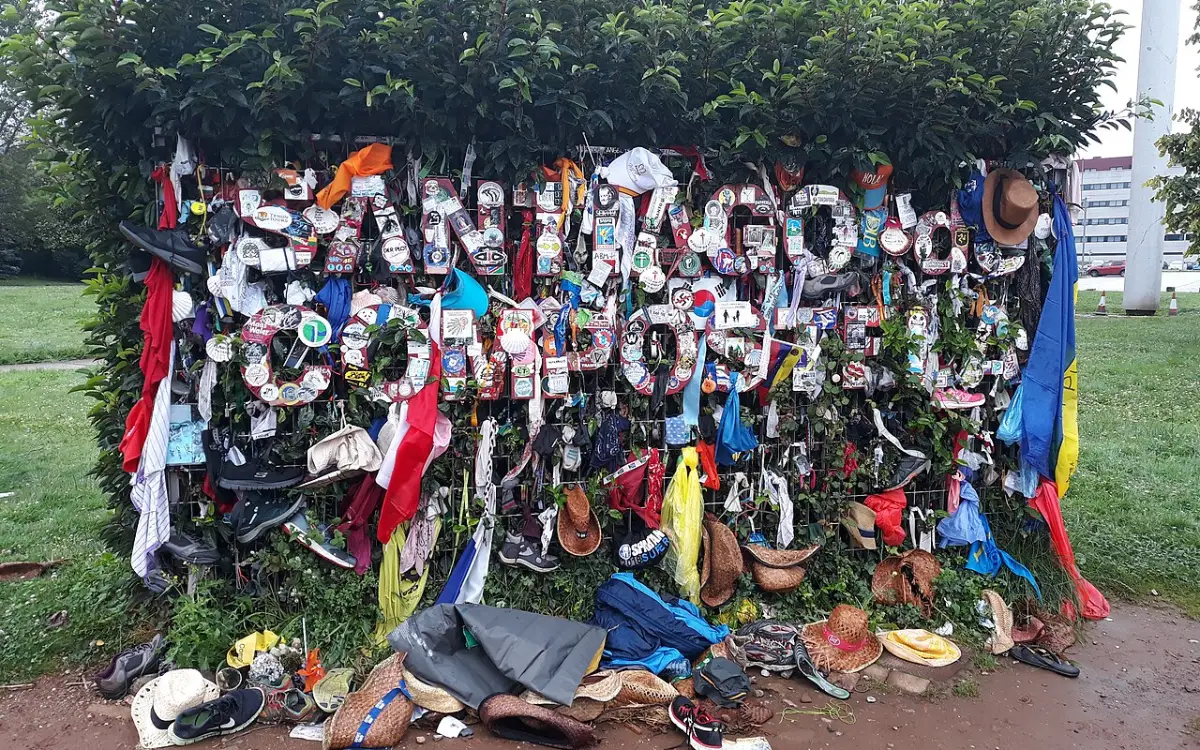
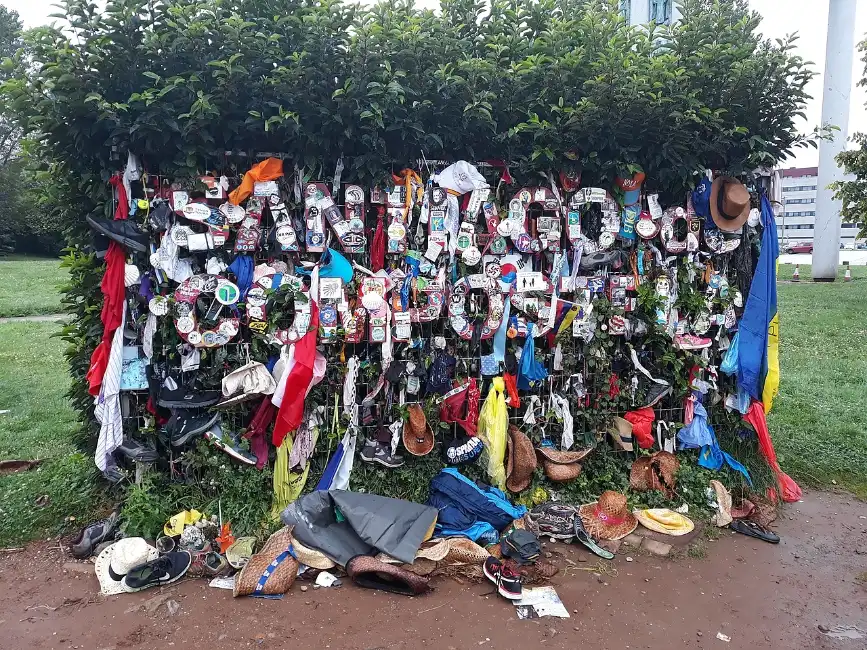
Photo: Camino Francés, Santiago de Compostela by Simon Burchell, CC BY-SA 4.0, via Wikimedia Commons.
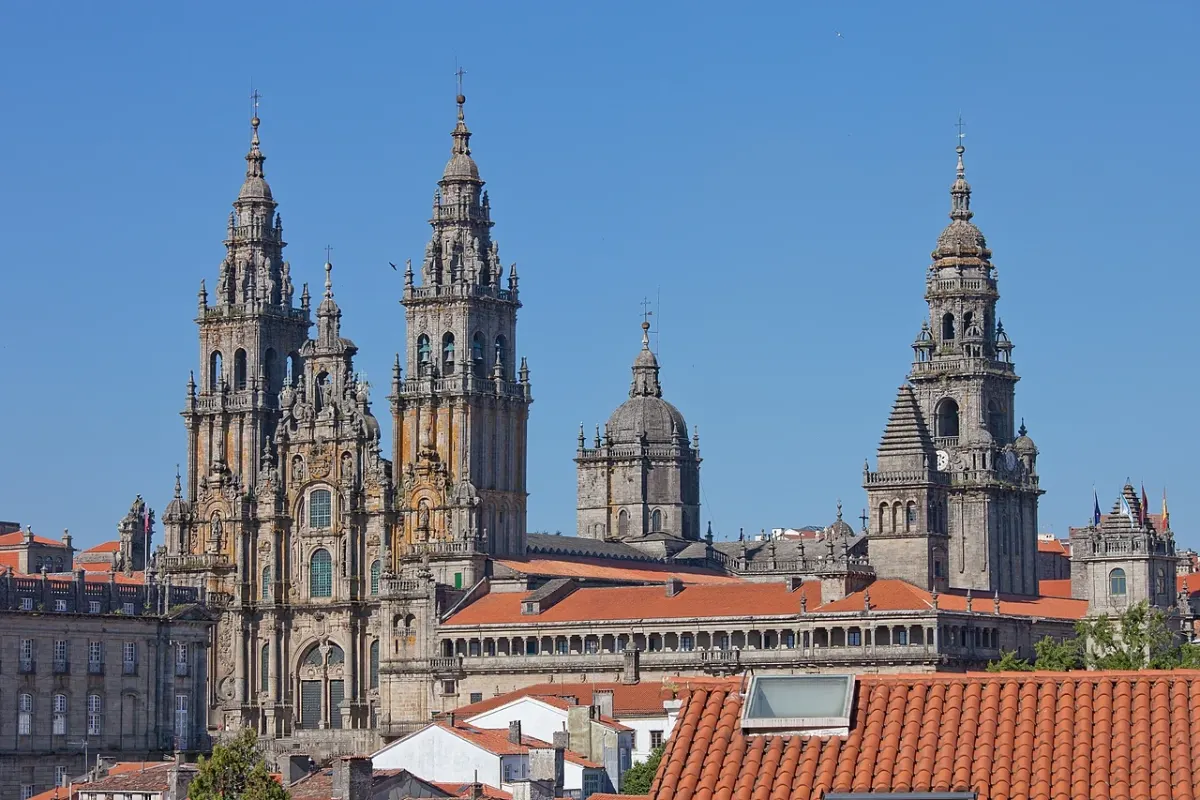
More photos: Camino Francés, Santiago de Compostela by Simon Burchell, CC BY-SA 4.0; Catedral de Santiago de Compostela by Luis Miguel Bugallo Sánchez, CC BY-SA 3.0. Via Wikimedia Commons.