Iceland’s Ring Road, Route 1, loops about 1,330 km around the island past waterfalls, glaciers, black beaches and volcanic lakes. Seven days is the minimum to drive the full circle without spending your whole holiday behind the wheel.
This post contains affiliate links. We may earn a commission if you book through them. How we make money.
Quick answer
Drive counterclockwise: Golden Circle, the south coast to Vík, the glacier lagoon at Jökulsárlón, the East Fjords, Lake Mývatn, Akureyri and back to Reykjavík. Expect three to five hours of driving a day plus stops, with six nights in different towns. Do it between late May and mid-September, when roads are open and days are long. In winter, choose the south coast only instead of the full loop. Book accommodation early because rural Iceland has few beds.
The plan at a glance
| Day | Route | Driving (approx.) | Overnight |
|---|---|---|---|
| 1 | Reykjavík – Golden Circle | 230 km, 3.5 h | Hella or Hvolsvöllur |
| 2 | South coast waterfalls and beaches | 130 km, 2 h | Vík |
| 3 | Vík – Skaftafell – Jökulsárlón | 270 km, 3.5 h | Höfn |
| 4 | East Fjords | 250 km, 3.5–4 h | Egilsstaðir |
| 5 | Dettifoss and Lake Mývatn | 230 km, 3.5 h with detour | Mývatn |
| 6 | Goðafoss – Akureyri (whale watching) | 100 km, 1.5 h | Akureyri |
| 7 | Akureyri – Reykjavík | 390 km, 5 h | Reykjavík |
Driving times are without stops; add at least two hours a day for viewpoints, short walks and photos. If you arrive early on day 1, pick up the car at Keflavík Airport and head straight out.
Days 1–3: Golden Circle to the glaciers
Day 1: Golden Circle. See Þingvellir National Park, where the North American and Eurasian plates pull apart; the Strokkur geyser, which erupts every few minutes; and the huge two-step Gullfoss waterfall. Add the Kerið crater or a soak at a geothermal lagoon. Sleep in Hella or Hvolsvöllur to be close to the south coast.
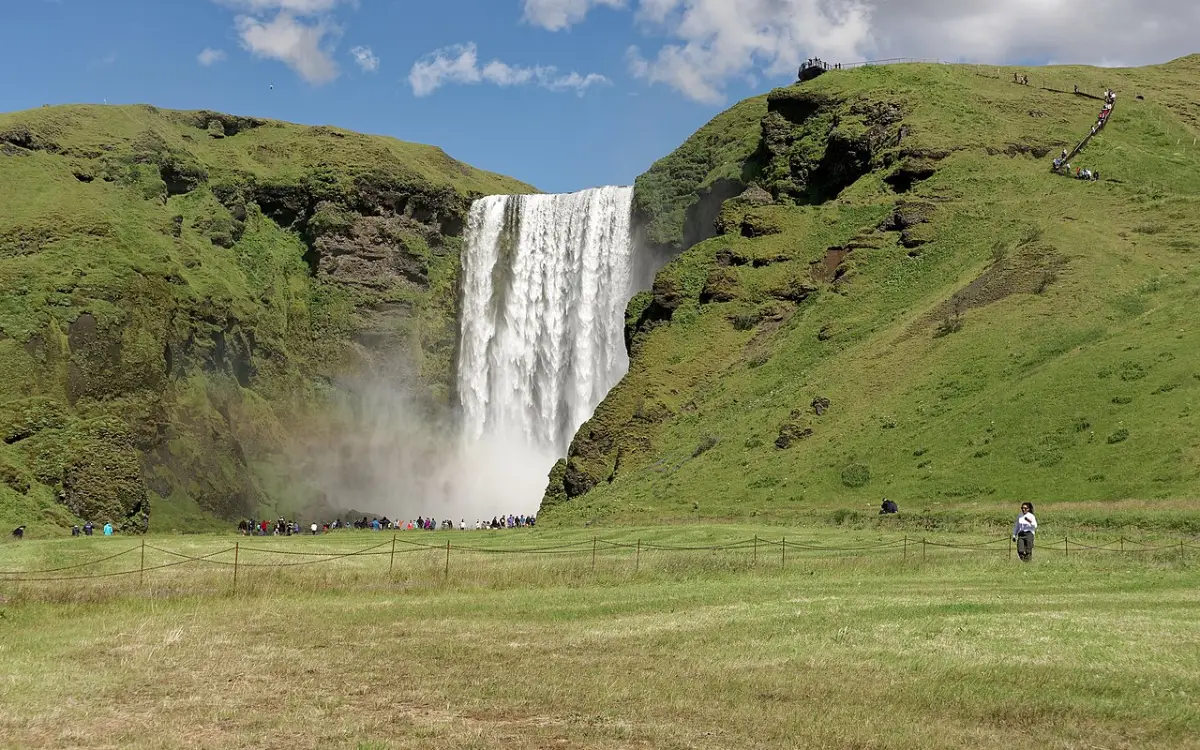
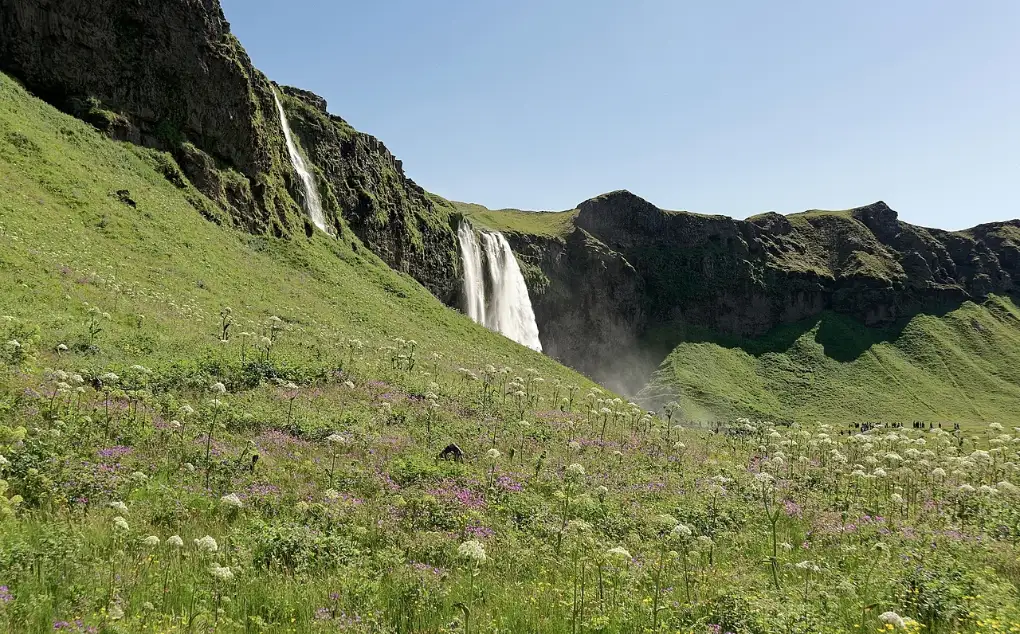
Day 2: South coast. Walk behind the Seljalandsfoss waterfall (bring a rain jacket), climb the steps beside Skógafoss, and visit the cliffs of Dyrhólaey for puffins in early summer. At Reynisfjara black-sand beach, stay well back from the water: sneaker waves have killed visitors. Sleep in Vík.
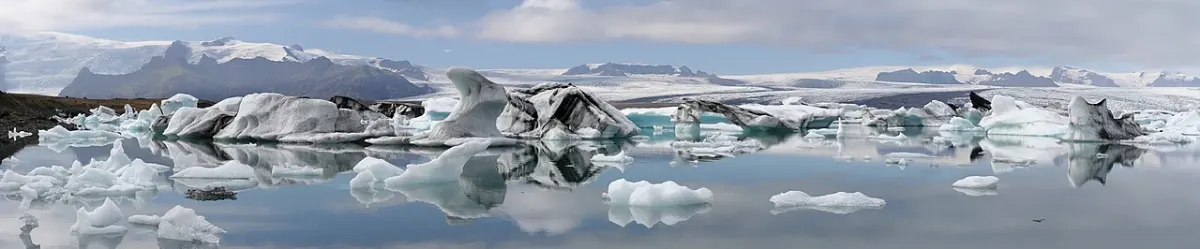
Day 3: Glaciers. Cross the vast lava and sand plains to Skaftafell for the short hike to Svartifoss, then continue to Jökulsárlón glacier lagoon to watch icebergs drift out to sea, and Diamond Beach across the road. A guided glacier hike or a boat ride on the lagoon are the highlights here. Sleep in Höfn, known for langoustine.
Days 4–5: East Fjords to Mývatn
Day 4: East Fjords. The road winds in and out of deep fjords past fishing villages such as Djúpivogur, Stöðvarfjörður and Fáskrúðsfjörður. Detour to the colorful village of Seyðisfjörður, 30 minutes over a mountain pass from Egilsstaðir, if you have energy left. Sleep in Egilsstaðir, the region’s service town.
Day 5: Dettifoss and Mývatn. Cross the high, empty plateau and detour to Dettifoss, one of Europe’s most powerful waterfalls. At Lake Mývatn, walk among the bubbling mud pools of Hverir, see the pseudo-craters at Skútustaðir and the lava formations of Dimmuborgir, and end the day at the Mývatn Nature Baths.
Book your car early
Compare rental cars in Iceland, including full insurance packages for gravel and sand damage.
Days 6–7: Akureyri and back to Reykjavík
Day 6: Akureyri. Stop at Goðafoss, the “waterfall of the gods”, on the way. Akureyri is Iceland’s second town, with cafés, a botanical garden and a good pool. Take a whale-watching tour from Akureyri or nearby Húsavík; humpback whales are frequent in summer.
Day 7: Back to Reykjavík. The longest drive of the trip. Break it at the turf-roofed houses of Glaumbær, the sea stack of Hvítserkur (a detour on gravel) or the Grábrók crater near Borgarnes. Return the car or keep it for the airport the next morning.
If you have an eighth day, spend it on the Snæfellsnes Peninsula, west of Reykjavík, for Kirkjufell mountain and the coastal villages.
Best season and winter
| Season | Conditions | Verdict |
|---|---|---|
| June to August | Up to 20+ hours of daylight, all roads open, busiest and priciest | Best for a first trip |
| May and September | Fewer crowds, lower prices, some snow possible in the north and east | Very good |
| October and April | Shorter days, changeable weather, storms possible | Possible with flexibility |
| November to March | 4–6 hours of daylight in midwinter, ice and road closures | Do the south coast instead; northern lights |
Driving rules and tips
- Speed limits: 90 km/h on paved roads, 80 km/h on gravel and 50 km/h in towns. Speed cameras are common and fines are high.
- Headlights must be on at all times.
- Never stop on the road for photos. Use proper pull-offs.
- One-lane bridges: the car closest to the bridge goes first.
- F-roads into the highlands need a 4×4 and are closed most of the year; the Ring Road itself is paved.
- Check conditions daily on road.is, the weather on vedur.is, and safety alerts on safetravel.is.
- Fuel: stations can be far apart in the east and north. Fill up when you are below half. Many pumps need a card with a PIN or a prepaid card.
Car and costs
A small 2WD car is enough for the Ring Road in summer. Iceland’s gravel, sand and wind can damage cars, so consider gravel and sand-and-ash protection in addition to basic cover. Read our Iceland car rental insurance guide before you book. Campervans combine car and bed and are popular in summer; use official campsites, as wild camping in vehicles is not allowed.
Fuel prices in Iceland are among the highest in Europe; the full loop uses roughly 90 to 110 liters in a small car. Rooms in small towns are limited and often cost €150 to €250 a night for a simple double in summer. Supermarkets such as Bónus and Krónan keep food costs down.
Protect your trip
Travel insurance that covers cancellations and medical costs is worth having in a country of changeable weather.
Seven days around Iceland is a lot of driving, but each day brings a completely different landscape. Start early, keep the evenings free, and let the weather decide which detours you take.
Photo: Skógafoss Waterfall by Jakub Hałun, CC BY 4.0, via Wikimedia Commons.
More photos: Jökulsárlón Panorama by Ira Goldstein, CC BY-SA 3.0; Seljalandsfoss Waterfall by Jakub Hałun, CC BY 4.0. Via Wikimedia Commons.