For most Western visitors, getting into Japan is simple: no visa, no fee and a short form online. The rules that catch people out are about medication, food and how long they can stay.
This post contains affiliate links. We may earn a commission if you book through them. How we make money.
Quick answer
Citizens of the US, UK, Canada, Australia and New Zealand do not need a visa to visit Japan as tourists for up to 90 days. You need a passport valid for your whole stay, may be asked to show an onward ticket, and can speed up arrival by filling in Visit Japan Web. Check medicines before you pack: some common cold and ADHD medicines are banned. Rules can change, so confirm with the official Ministry of Foreign Affairs of Japan site or your government’s travel advice before you fly.
Do you need a visa?
Japan has visa exemption agreements with around 70 countries and regions. For tourism, visiting friends, short business meetings or conferences, the following travelers can enter without a visa:
| Passport | Visa needed? | Maximum stay |
|---|---|---|
| United States | No | 90 days |
| Canada | No | 90 days |
| United Kingdom | No | 90 days (can apply to extend in Japan) |
| Ireland | No | 90 days (can apply to extend in Japan) |
| Australia | No | 90 days |
| New Zealand | No | 90 days |
| Most EU countries | No | 90 days |
You cannot work on a visa-free entry, including paid freelance or remote work for a Japanese company. If you hold a different passport, a criminal record, or plan to study or work, check visa requirements with the Japanese embassy in your country.
Passport and onward travel
Japan does not have a strict six-month passport validity rule, but your passport must be valid for your entire stay. Many airlines apply their own stricter checks, so having at least six months left avoids problems at check-in. You should have a blank page for the landing permission sticker.
Immigration officers can ask for proof of onward or return travel and where you will stay. Keep your return ticket and first hotel booking handy on your phone.
Arrival: forms, fingerprints and Visit Japan Web
Every foreign visitor over 16 has their fingerprints scanned and photo taken at immigration. You also need to complete an arrival card and a customs declaration. The easiest way is to do both online beforehand through Visit Japan Web, the free official site, which gives you QR codes to use at the airport. Our step-by-step Visit Japan Web guide explains how.
If you plan to buy a JR Pass, ask for a passport stamp or sticker showing “Temporary Visitor” status if you go through an automated gate.
Medication rules
This is where many travelers get into trouble. Japan has strict drug laws, and some medicines sold over the counter in the US, UK or Australia are banned or restricted.
- Banned: stimulant ADHD medicines such as Adderall and other amphetamine-based drugs, even with a prescription. Some cold and allergy medicines containing pseudoephedrine in higher doses are also prohibited.
- Allowed in limited amounts: most prescription medicines up to a one-month supply, and most over-the-counter medicines up to a two-month supply, for personal use.
- More than that: you must apply in advance for an import certificate (often called a Yunyu Kakunin-sho) through the Ministry of Health, Labour and Welfare.
- Controlled drugs such as strong painkillers or some sleeping pills may need a separate narcotics permit.
Carry medicines in their original packaging with a copy of your prescription, and check the Ministry of Health’s English pages if you are unsure about a specific product.
Customs allowances
| Item | Allowance |
|---|---|
| Alcohol | 3 bottles (about 760 ml each) |
| Cigarettes | 200 sticks (heated tobacco has separate limits) |
| Perfume | 2 ounces |
| Other goods | Up to ¥200,000 total overseas market value |
| Cash and equivalents | Declare amounts over ¥1,000,000 |
Meat products, including jerky, sausages and many cured meats, cannot be brought in without certificates, and you can be fined. Fresh fruit, vegetables and plants may need inspection. Always declare food if you are not sure.
New fees and upcoming changes
- Departure tax: the International Tourist Tax rose from ¥1,000 to ¥3,000 per departure in July 2026. It is normally included in your airline ticket.
- Tax-free shopping: since November 2026, shops charge consumption tax at the till and visitors claim a refund when leaving Japan, after customs checks the goods. Keep purchases unopened and carry them with you when you depart.
- Local accommodation taxes: Tokyo, Kyoto, Osaka and a growing number of other places charge a small nightly hotel tax.
- JESTA: Japan is preparing an electronic travel authorization for visa-free travelers, similar to the US ESTA. It is expected around 2028 but is not required yet. Do not pay any website claiming to sell it now.
Is travel insurance required?
No, Japan does not require travel insurance for visa-free visitors. However, the Japanese government strongly recommends it. Hospitals expect visitors to pay in full, and some may ask for a deposit before treatment. A broken bone or short hospital stay can easily cost several thousand dollars, and medical evacuation far more.
Covered for the unexpected?
Compare travel insurance plans with medical cover for Japan.
Pre-departure checklist
- Passport valid for your whole trip, ideally with six months left.
- Return or onward ticket, and first hotel booking saved offline.
- Visit Japan Web completed, QR codes screenshotted.
- Medicines checked against Japan’s rules, in original packaging with prescriptions.
- No meat products in your luggage.
- Travel insurance with medical cover.
- eSIM or pocket WiFi arranged so you have data on landing.
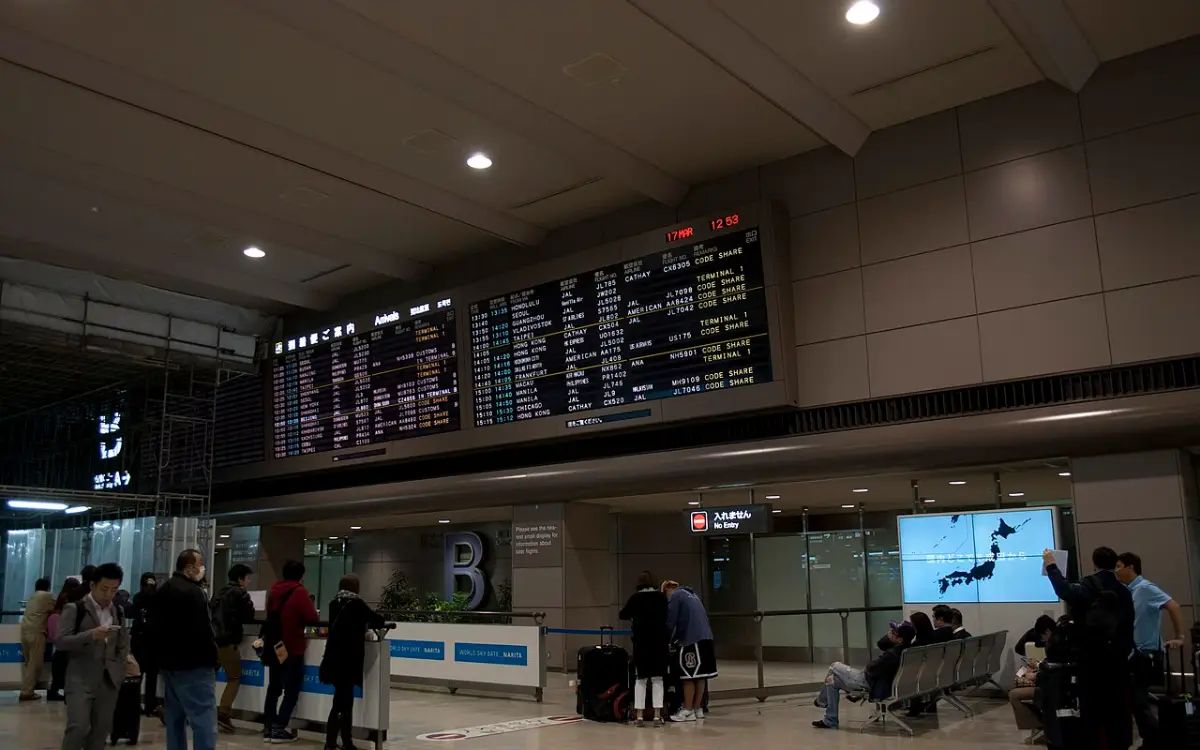
Photo: Narita Airport Terminal 2 arrival gate by Chihaya Sta, CC BY 4.0, via Wikimedia Commons.
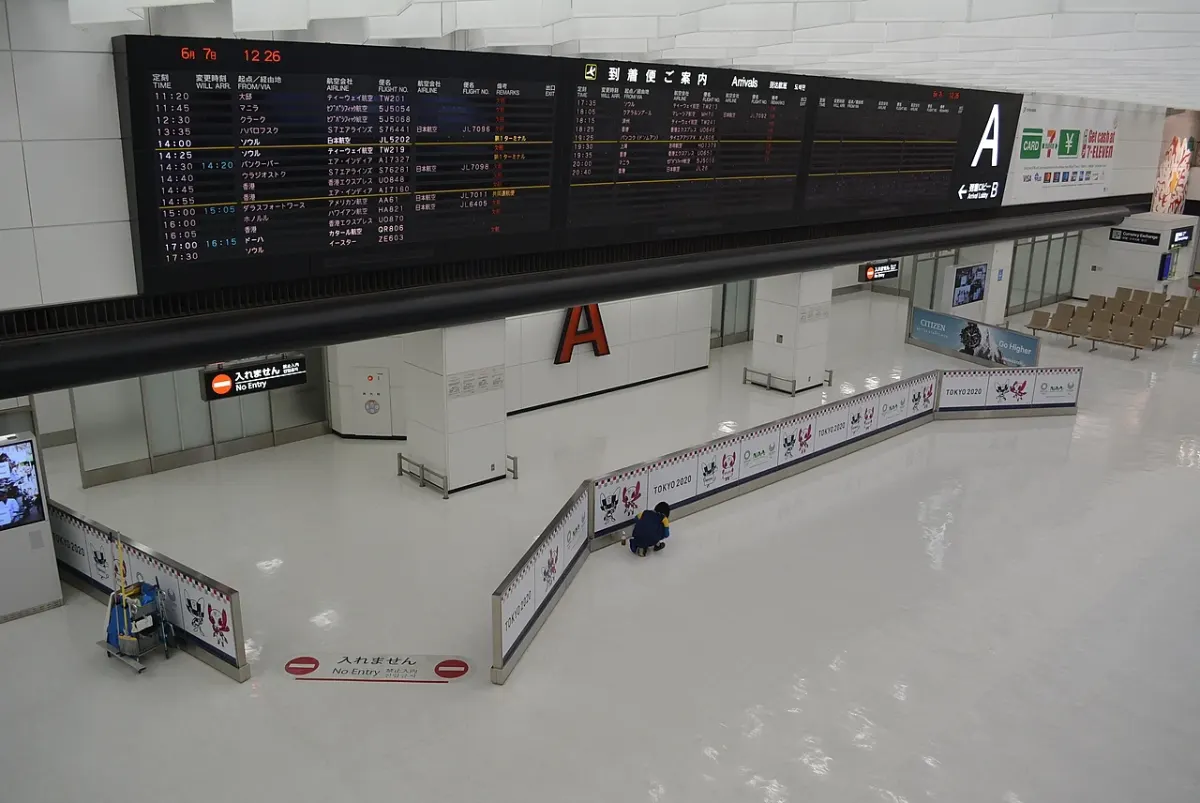
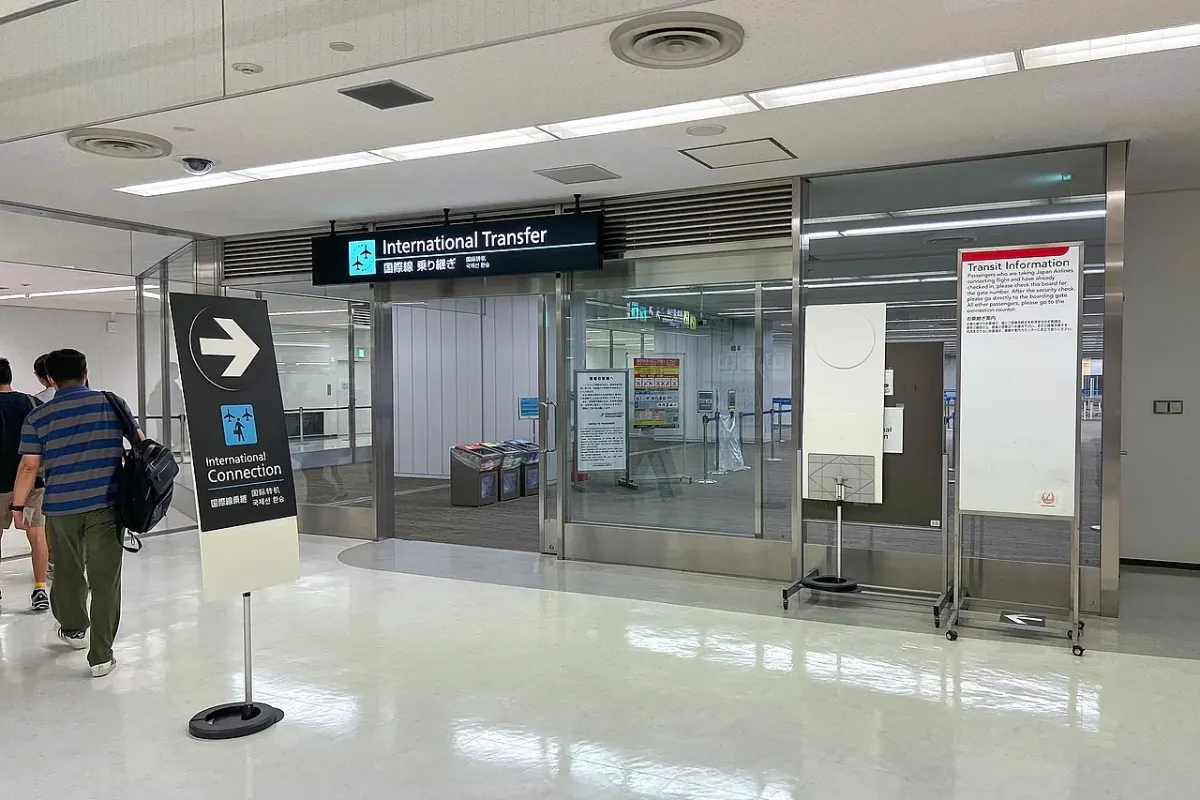
More photos: Arrival gate at Narita Airport Terminal 2 by Katorisi, CC BY-SA 4.0; International transfer entrance at RJAA T2 by N509FZ, CC BY-SA 4.0. Via Wikimedia Commons.