An hour south of Tokyo, Kamakura has a giant bronze Buddha, Zen temples in wooded hills and a little seaside train that runs to the island of Enoshima. It is the easiest and most relaxing day trip from the city.
This post contains affiliate links. We may earn a commission if you book through them. How we make money.
Quick answer
Take the JR Yokosuka Line from Tokyo Station or the Shonan-Shinjuku Line from Shinjuku to Kamakura (about an hour, around ¥950 each way). See Tsurugaoka Hachimangu and the Great Buddha, then ride the Enoden train along the coast to Enoshima for the afternoon and sunset. If you start from Shinjuku, the Odakyu Enoshima-Kamakura Freepass covers the round trip and the Enoden for a little less.
Getting there and passes
| Option | Starts at | Approx. cost | Good for |
|---|---|---|---|
| JR train + Enoden day pass | Tokyo, Shinagawa or Shinjuku | About ¥950 each way + ¥800 Enoden pass | Most travelers, JR Pass holders (JR part free) |
| Odakyu Enoshima-Kamakura Freepass | Shinjuku | About ¥1,600–¥1,700 round trip, Enoden included | Travelers staying in Shinjuku |
| Guided day tour | Central Tokyo | About ¥10,000–¥15,000 | Visitors who want a guide |
Prices are approximate for late 2026. The Enoden, a small electric train, runs between Kamakura and Fujisawa via Hase (for the Great Buddha) and Enoshima. A one-day Enoden pass, called Noriorikun, pays off after three or four rides. With a Suica card you can also just tap as you go.
A clever route is to go one way and come back the other: JR to Kamakura in the morning, the Enoden to Enoshima, and the Odakyu line back to Shinjuku from Katase-Enoshima Station in the evening.
What to see in Kamakura
Kamakura was Japan’s capital from 1185 to 1333, when the first shogunate ruled from here. It has dozens of temples and shrines; these are the ones worth your limited time.
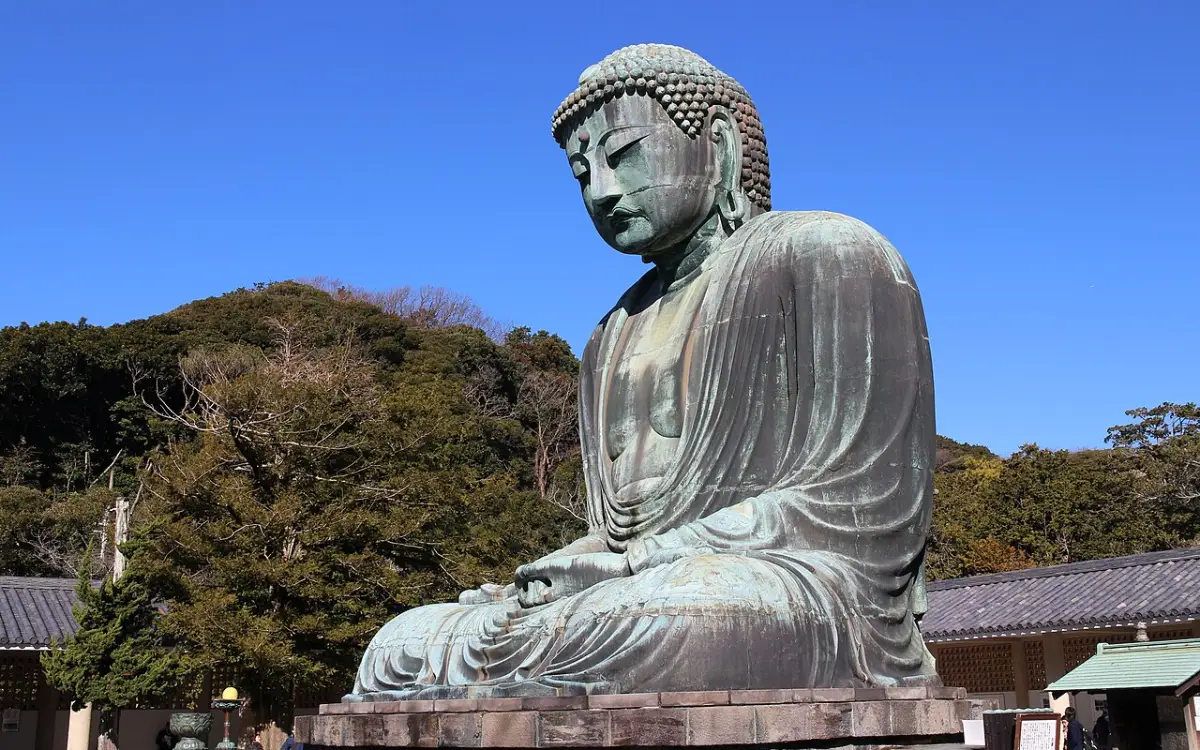
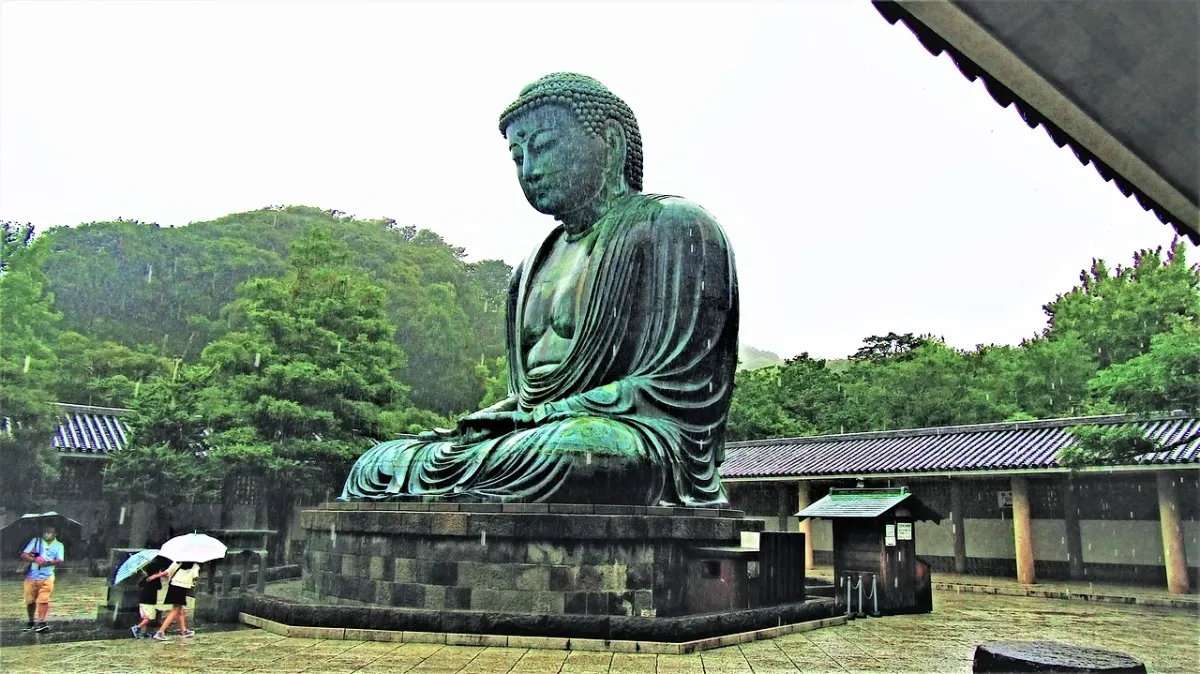
- The Great Buddha (Kotoku-in): a 13-meter bronze Buddha that has sat in the open air since a tsunami destroyed its hall in 1498. For a small extra fee you can go inside the statue. A short walk from Hase Station.
- Hasedera: a hillside temple near the Buddha with a tall wooden Kannon statue, a cave of small carved figures and sea views. Its hydrangea path is famous in June.
- Tsurugaoka Hachimangu: Kamakura’s main shrine, at the end of a long tree-lined approach from the station. Free to enter.
- Komachi-dori: the busy shopping street from Kamakura Station toward the shrine, lined with snack shops. Try a soft-serve with purple sweet potato or a shirasu (whitebait) bun.
- Hokokuji: a small Zen temple with a bamboo grove and a teahouse where you can have matcha among the stalks. Quieter than Arashiyama in Kyoto. A 10-minute bus or taxi ride from the station.
- Engaku-ji and Kencho-ji in Kita-Kamakura: large, peaceful Zen temples, best if you have extra time or enjoy hiking. A trail links Kita-Kamakura to the Great Buddha in about 90 minutes.
What to see on Enoshima
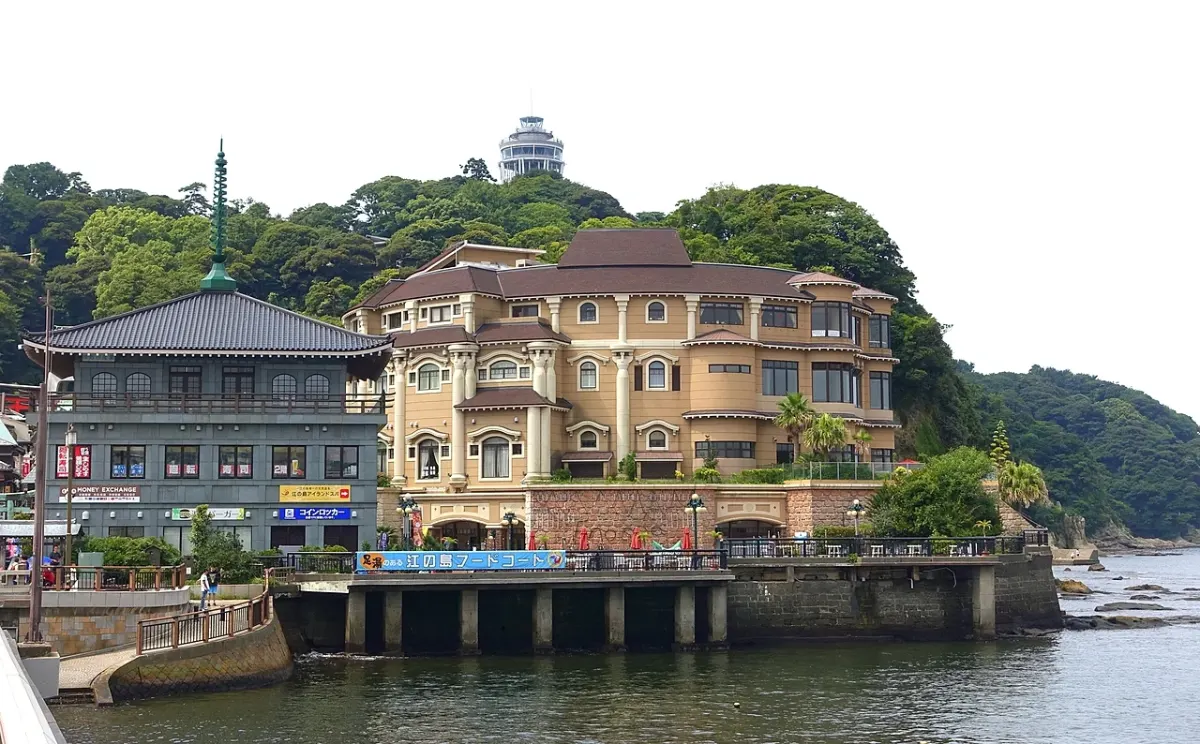
Enoshima is a small, hilly island joined to the mainland by a 600-meter bridge. On clear days, especially in winter, you can see Mt Fuji across the bay.
- Enoshima Shrine: three shrine halls on the way up the island, reached by stairs or a series of outdoor escalators.
- Samuel Cocking Garden and the Sea Candle: a garden at the top of the island with an observation tower for views of the coast and Fuji.
- Iwaya Caves: sea caves on the far side of the island, lit by candles you carry yourself.
- Seafood: the island is known for shirasu (tiny whitebait) served raw or boiled on rice, and for tako senbei, a crispy octopus cracker pressed flat.
The sunset from the rocks behind the island or the bridge back to the mainland is the perfect end to the day.
Want a guide for the day?
Compare Kamakura and Enoshima tours from Tokyo, including small-group walks.
A sample day
| Time | Plan |
|---|---|
| 8:00 | JR train from Tokyo or Shinjuku |
| 9:00–10:30 | Tsurugaoka Hachimangu and Komachi-dori |
| 10:45–11:30 | Hokokuji bamboo grove and matcha |
| 12:00 | Lunch near Kamakura Station |
| 13:00–14:30 | Enoden to Hase: Great Buddha and Hasedera |
| 14:45 | Enoden along the coast to Enoshima |
| 15:15–17:30 | Enoshima Shrine, Sea Candle, Iwaya Caves, sunset |
| 18:00 | Odakyu train from Katase-Enoshima to Shinjuku, or JR from Fujisawa |
If you only have half a day, choose Kamakura’s center and the Great Buddha, and leave Enoshima for another time.
Best time to go
- June: hydrangea season at Hasedera and Meigetsu-in, beautiful but very crowded; Hasedera often hands out timed tickets.
- Late November to early December: autumn colors at the Zen temples, later than in the mountains.
- Winter: clear days with the best chance of seeing Mt Fuji from Enoshima, and fewer visitors.
- Summer: Yuigahama and the Enoshima beaches are busy with swimmers from July to August; the town is hot and humid.
Weekdays are much quieter than weekends at any time of year.
Tips for a smooth day
- Go early on the Enoden. The little train gets very crowded from late morning, especially on weekends. Ride it before 10 am or after 4 pm if you can.
- Respect local rules. The railway crossing by Kamakura-Kokomae Station, made famous by an anime, has guards and photo restrictions because of crowding. Do not stand in the road.
- Eat sitting down. Kamakura asks visitors not to eat while walking on Komachi-dori; most shops have small spaces to stand and eat.
- Wear walking shoes. Enoshima is all stairs, and the temple paths are uneven.
- Carry some cash for temple entry fees, which are usually a few hundred yen each.
Kamakura and Enoshima make a perfect change of pace from Tokyo’s crowds. Add it to a longer stay with our 5 days in Tokyo itinerary.
Photo: Kamakura Great Buddha by Suicasmo, CC BY-SA 4.0, via Wikimedia Commons.
More photos: The Great Buddha of Kōtoku-in (Kamakura Daibutsu) by Dandy1022, CC BY-SA 3.0; Enoshima Island Spa by Daderot, CC0. Via Wikimedia Commons.