Hakone packs mountain railways, volcanic vents, a lake with Mt Fuji views and hot springs into one easy loop, about 90 minutes from Tokyo. Here is how to do it yourself, and when a tour makes more sense.
This post contains affiliate links. We may earn a commission if you book through them. How we make money.
Quick answer
Most travelers should go on their own with the Hakone Free Pass, which costs about ¥6,100 for two days from Shinjuku and covers the train there and back plus every link in the Hakone loop. Leave Shinjuku by 8 am. Book a guided tour instead if you want a guaranteed Mt Fuji stop, are traveling with older relatives, or have only one shot at the day and do not want to manage connections.
Free Pass vs guided tour
| Factor | Hakone Free Pass (DIY) | Guided day tour |
|---|---|---|
| Cost per adult | About ¥6,100 (2 days) + ¥1,200 each way for the Romancecar | About ¥12,000–¥20,000, often with lunch |
| Start point | Shinjuku Station | Hotel pickup or central meeting point |
| Flexibility | Full: stay longer anywhere | Fixed schedule |
| Mt Fuji 5th Station | Not practical in a day | Often included |
| Onsen time | Easy to add | Rarely included |
| Effort | Several connections | None |
| Best for | Independent travelers, two-day stays | First-timers short on time, families with grandparents |
Prices are approximate for late 2026 and change with season and operator, so check before booking.
What the Hakone Free Pass covers
The Hakone Free Pass is sold by Odakyu, the private railway that runs from Shinjuku to Hakone. It covers the round trip from Shinjuku to Odawara and Hakone-Yumoto on regular Odakyu trains, plus unlimited rides on eight forms of transport inside Hakone: the Hakone Tozan mountain train, the cable car, the Hakone Ropeway, the Lake Ashi sightseeing cruise and most local buses. It also gives small discounts at dozens of museums, hot springs and restaurants.
A two-day pass from Shinjuku costs about ¥6,100 for adults and a three-day pass about ¥6,500. Children pay much less. If you already have a JR Pass, buy the cheaper version from Odawara and take the Shinkansen to Odawara instead.
The Romancecar limited express is not included. It costs about ¥1,200 extra each way and saves roughly 30 minutes, with big windows and reserved seats. It is worth it, especially on the way there. Book seats online or at the station a day ahead on weekends.
Is it worth it for one day? Buying each leg separately costs roughly ¥8,000 to ¥9,000 for the full loop and round trip, so the two-day pass pays off even if you use it for just one day.
Doing it yourself?
Buy the Hakone Free Pass in advance and collect it at Shinjuku.
The Hakone loop, step by step
The classic route runs counterclockwise. You can do it the other way, but starting with the train means you reach the lake in the afternoon, when the boats are less crowded.
- Shinjuku to Hakone-Yumoto (about 85 minutes by Romancecar). The gateway town has rows of souvenir shops and day-use hot springs.
- Hakone Tozan Railway to Gora (about 40 minutes). A small mountain train that climbs through switchbacks. In June and early July, hydrangeas line the tracks.
- Hakone Open-Air Museum (optional, one stop before Gora at Chokoku-no-Mori). A sculpture park with a Picasso pavilion and a free outdoor foot bath. Allow 90 minutes.
- Cable car from Gora to Sounzan (10 minutes).
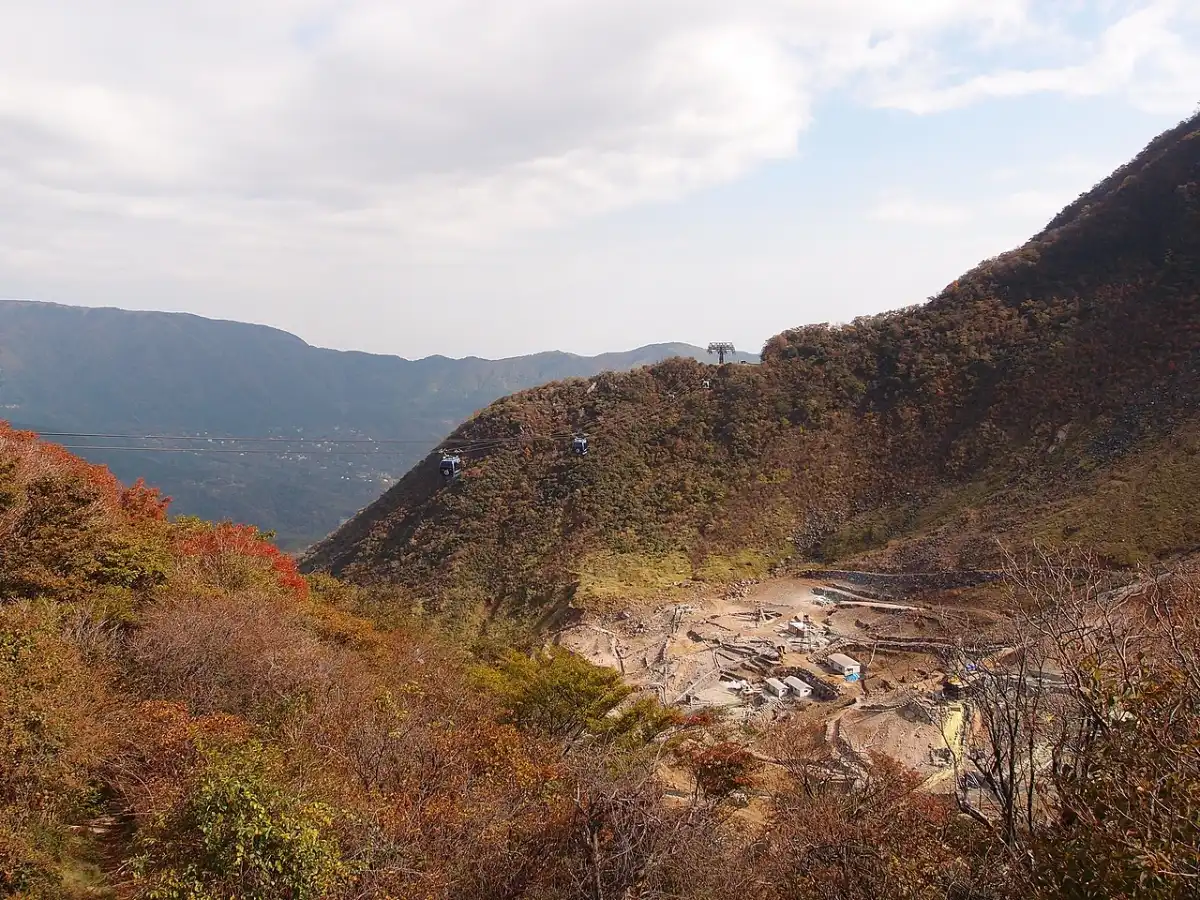
- Hakone Ropeway via Owakudani to Togendai (about 30 minutes). Owakudani is a steaming volcanic valley. Try the black eggs boiled in the hot spring water; local legend says each one adds seven years to your life. On clear days you see Mt Fuji from the gondola.
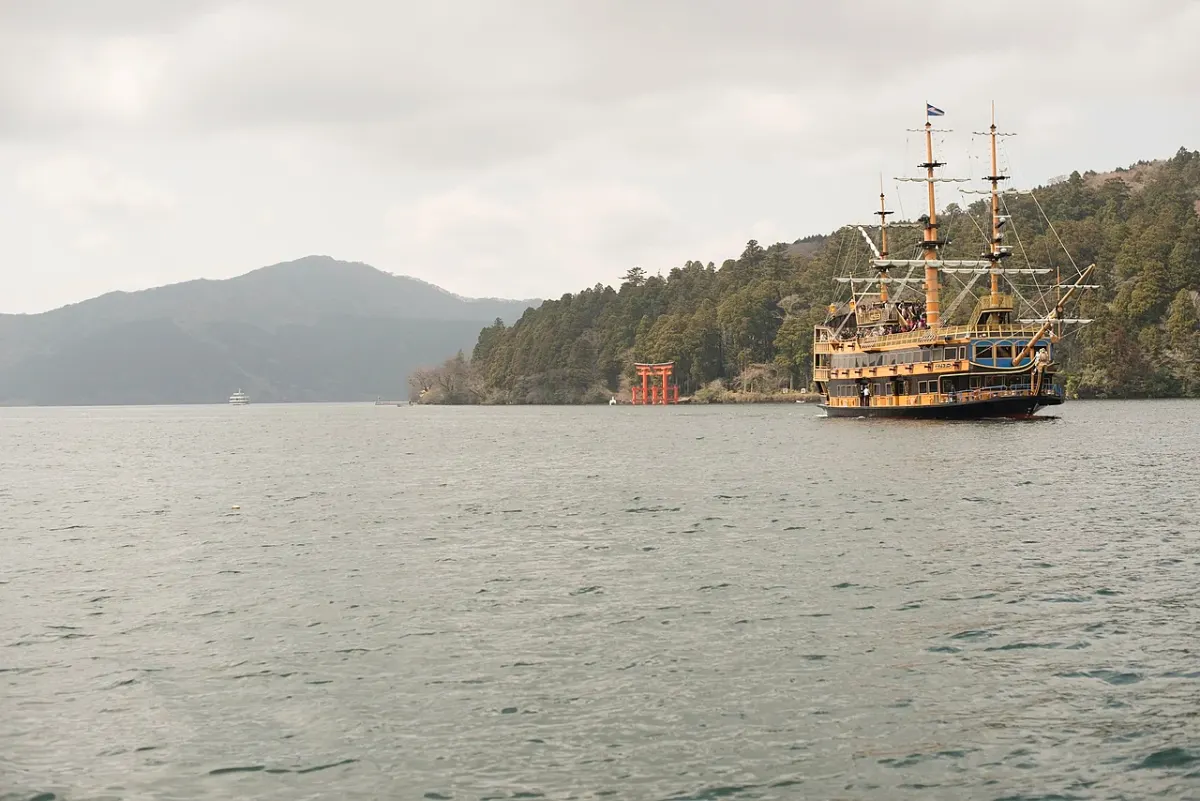
- Lake Ashi cruise to Moto-Hakone or Hakone-machi (about 30 to 40 minutes) on a replica pirate ship.
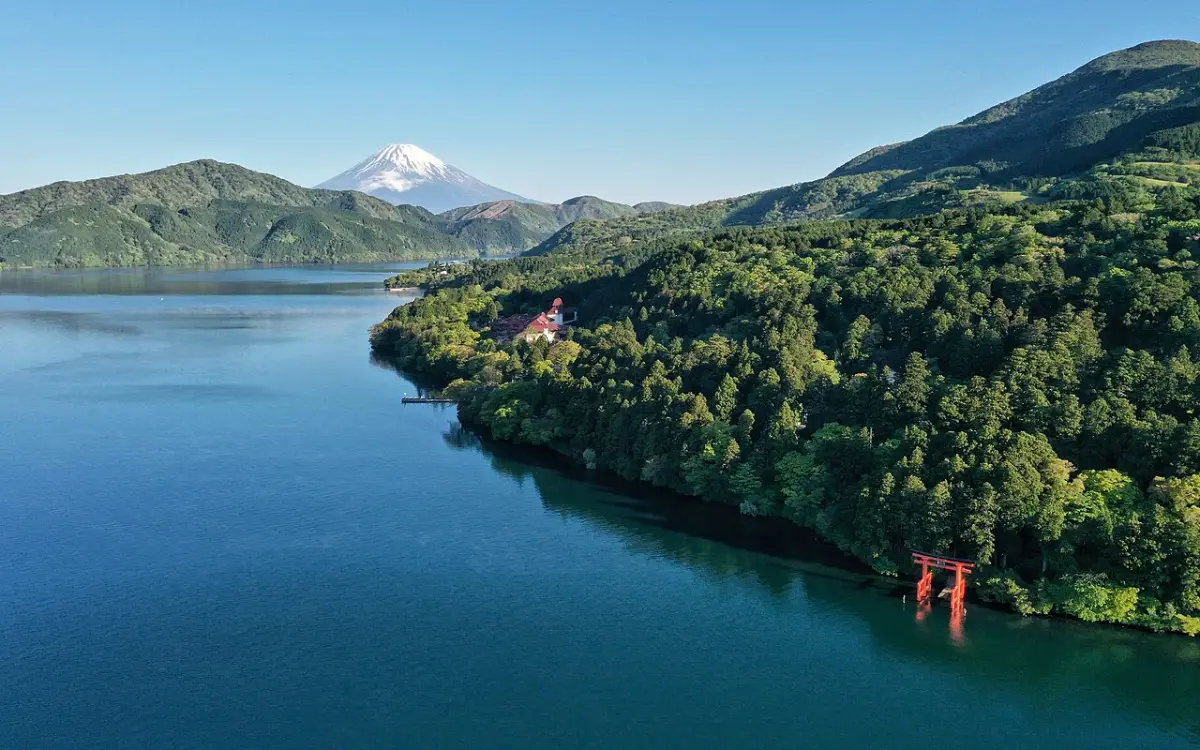
- Hakone Shrine, a short walk from Moto-Hakone, with its red torii gate standing in the lake. Expect a queue for photos.
- Bus back to Hakone-Yumoto (about 40 minutes), then the train to Shinjuku.
The ropeway closes from time to time when volcanic gas levels at Owakudani rise, and also in strong wind. When it does, replacement buses run. Check the Hakone Navi or Odakyu website the morning you go.
A sample day
| Time | Stop |
|---|---|
| 7:30 | Romancecar from Shinjuku |
| 9:00 | Hakone-Yumoto, change to the Tozan Railway |
| 9:45–11:15 | Hakone Open-Air Museum |
| 11:30 | Cable car and ropeway to Owakudani |
| 12:15–13:15 | Owakudani: lunch and black eggs |
| 13:45 | Lake Ashi cruise from Togendai |
| 14:30–15:30 | Hakone Shrine and the old Tokaido cedar avenue |
| 16:00–17:30 | Bus to Yumoto and a day-use onsen |
| 18:00 | Romancecar back to Shinjuku, arriving around 19:30 |
That is a full day. If you want time to relax in a hot spring properly, or to see Mt Fuji in the softer morning light, stay overnight. A night in a ryokan with a private bath and kaiseki dinner is one of the most memorable things you can do in Japan, and your Free Pass is already valid for two days.
When a guided tour is better
Guided tours from Tokyo usually combine Hakone with Mt Fuji’s 5th Station or the Lake Kawaguchiko area, which is hard to fit into a DIY day because the two areas are not well connected by public transport. A tour makes sense if:
- You want both Mt Fuji up close and Hakone in a single day.
- You are traveling with people who find stairs, crowded trains or many transfers difficult.
- You are visiting in peak season and would rather not queue for the ropeway and boat.
- You only have a few days in Tokyo and do not want to spend an evening planning connections.
The trade-off is time. Coach tours spend three to four hours on the road, and you get roughly 30 to 60 minutes at each stop. Read reviews for the specific route, and check whether the ropeway and boat are included or swapped for bus rides.
Prefer to let someone else drive?
Compare Hakone and Mt Fuji day tours from Tokyo, with hotel pickup options.
Tips for a smooth day
- Go on a weekday. Weekend queues for the ropeway and pirate ship can run 30 to 60 minutes.
- Check the Fuji forecast. Mt Fuji is visible most often from November to February and in early mornings. In summer it hides behind clouds most days.
- Travel light. Use coin lockers at Shinjuku, or Hakone-Yumoto’s luggage delivery service if you are staying overnight.
- Bring a towel for the onsen, or rent one for a few hundred yen. Most day-use baths do not allow visible tattoos, but some have private family baths you can book.
- Carry cash. Small cafes and stalls at Owakudani and the shrine may not take cards.
Bottom line: if you can handle a few connections, the Hakone Free Pass gives you a cheaper, more flexible day than any tour. If Mt Fuji is the real goal, read our Mt Fuji day trip guide first, because Kawaguchiko is often the better choice for close-up views.
Photo: Lake Ashi and Hakone Shrine by Charlie fong, CC BY-SA 4.0, via Wikimedia Commons.
More photos: Pirate ship on Lake Ashi by Maarten Heerlien, CC BY 2.0; Owakudani @ Hakone by Guilhem Vellut, CC BY 2.0. Via Wikimedia Commons.