Winter is Japan’s most underrated season: clear skies, the best views of Mt Fuji, quieter temples, lower hotel prices outside the holidays, and snow country that looks like a postcard.
This post contains affiliate links. We may earn a commission if you book through them. How we make money.
Quick answer
Tokyo, Kyoto and Osaka are cool and sunny in winter, around 8 to 12°C by day and near freezing at night, with little snow. For real snow, go north and into the mountains: Hokkaido, Tohoku, Nagano and the Japanese Alps. The best window is mid-January to late February, after the New Year closures and before spring prices. Pack layers, not a huge coat, because trains and buildings are warm.
Winter weather by region
| Place | Day high / night low | Snow? |
|---|---|---|
| Sapporo (Hokkaido) | -1°C / -7°C | Lots, from December to March |
| Nagano and Hakuba | 3°C / -5°C (colder in the mountains) | Heavy in the mountains |
| Kanazawa and Takayama | 3–7°C / -4–1°C | Frequent, wet snow |
| Tokyo | 10°C / 1°C | Rare, a few days a year |
| Kyoto and Osaka | 9°C / 1°C | Occasional light dusting |
| Hiroshima and Fukuoka | 10°C / 2°C | Rare |
| Okinawa | 19°C / 14°C | Never |
These are long-term averages. The Sea of Japan side of Honshu, including Kanazawa and Niigata, gets far more snow and gray skies than the Pacific side, where Tokyo has some of its sunniest weather of the year.
Pros and cons of a winter trip
Pros: Mt Fuji is visible on most clear mornings; Kyoto’s temples are much less crowded in January and February; hotels and flights are cheaper outside the holidays; hot springs feel their best; and winter food, from crab and hot pot to oden and roasted sweet potatoes, is excellent.
Cons: Days are short, with sunset around 4:30 to 5 pm in Tokyo; the New Year period brings closures and crowds; some mountain roads and sights close for the season; and snow can delay flights and buses in the north.
Where to go
Hokkaido
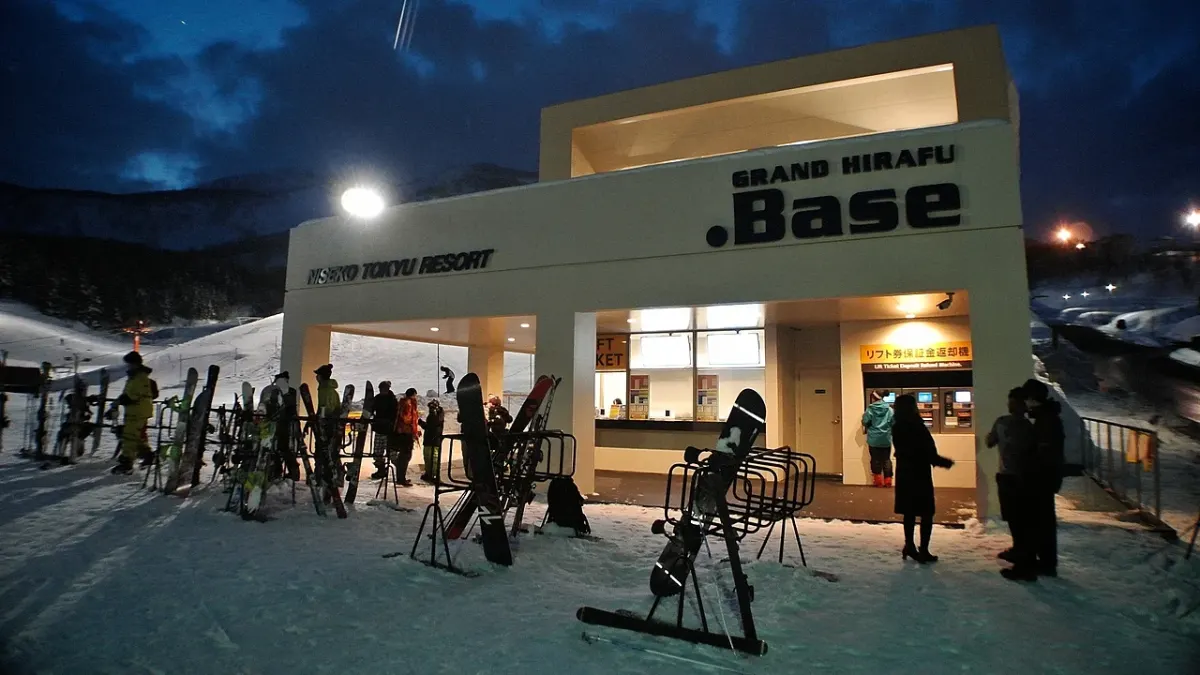
Japan’s northern island is the heart of winter travel. Sapporo hosts the famous Snow Festival in early February. Otaru, 40 minutes away, has a canal lit with lanterns, and Niseko and Furano have some of the world’s best powder snow for skiing. In the east, you can see drift ice on the Sea of Okhotsk from Abashiri and red-crowned cranes in Kushiro from late January to February.
Nagano and the Japanese Alps
From Tokyo, the Hokuriku Shinkansen reaches Nagano in 80 to 90 minutes. Nearby, the Jigokudani Monkey Park has wild snow monkeys bathing in a hot spring, best from January to February. Hakuba and Nozawa Onsen are major ski areas; Nozawa is also a charming hot spring village with free public baths.
Shirakawa-go and Takayama
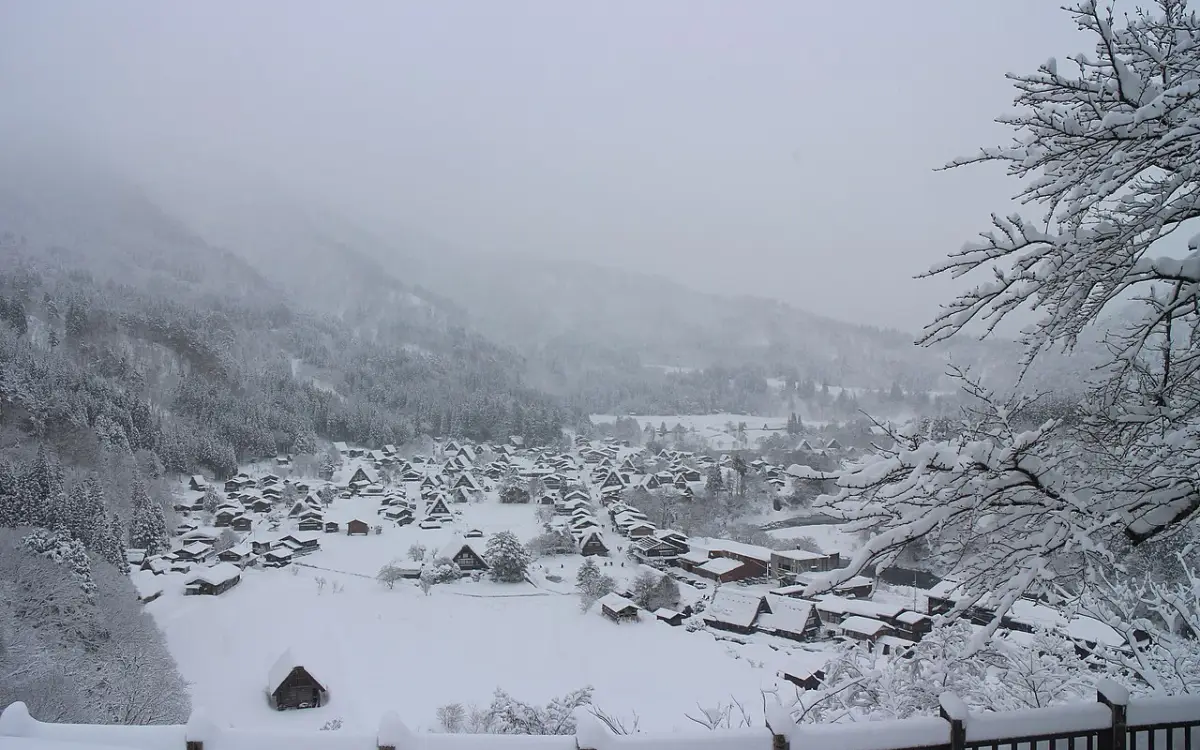
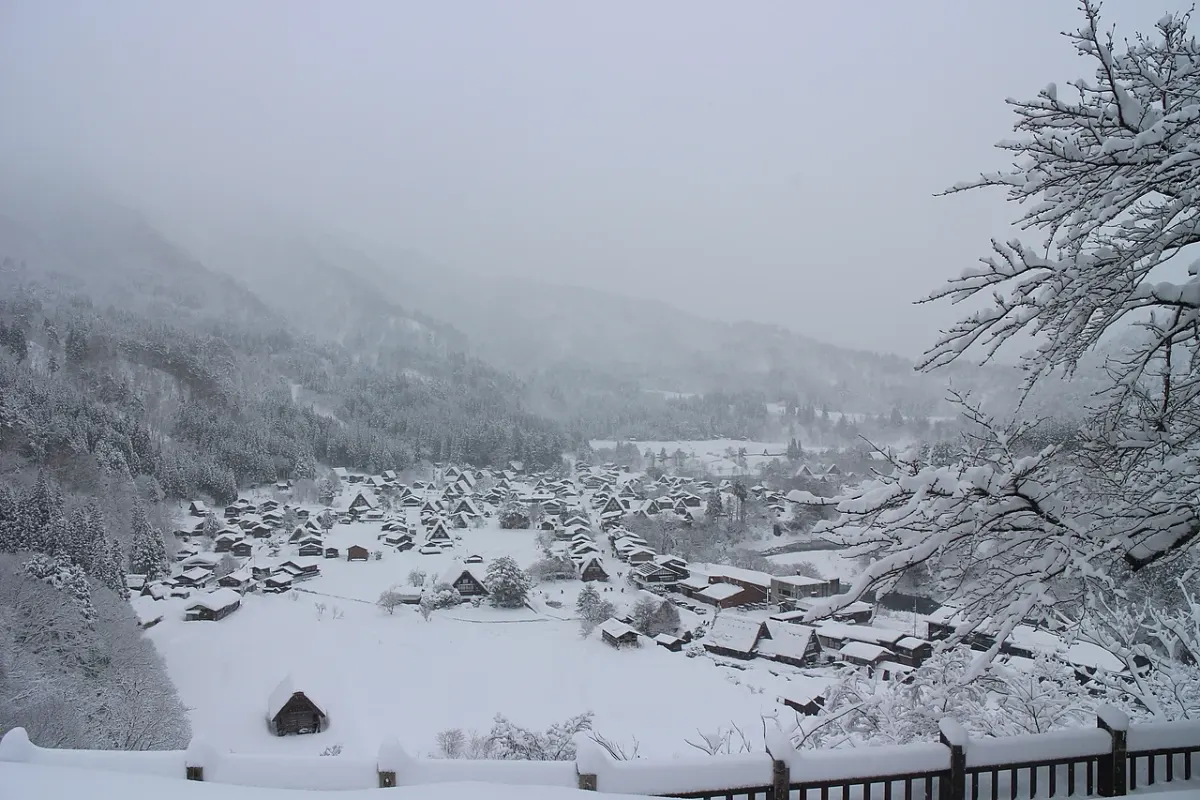
The thatched-roof village of Shirakawa-go under snow is one of Japan’s most famous winter images. On a few evenings in January and February, the village is lit up; entry on those nights now requires an advance reservation, usually as part of a bus tour. Takayama, a two-hour bus ride away, adds a snowy old town and sake breweries.
Tohoku
Northern Honshu has the “snow monsters” of Zao, trees coated in ice, from January to February, and hot spring towns such as Ginzan Onsen. Ginzan has become so popular that access for non-staying visitors is now restricted, especially in the evenings; check the latest rules before you go, or book a night there.
Tokyo, Kyoto and the classic route
The big cities are perfectly pleasant in winter and have the least crowded temples of the year. A light snowfall on Kyoto’s Kinkaku-ji is a rare but famous sight. Tokyo’s winter illuminations run from mid-November to around Christmas or Valentine’s Day.
Okinawa
If you would rather escape the cold, Okinawa is mild all winter. It is not beach weather for most people, but it is ideal for sightseeing, and the first cherry blossoms in Japan bloom here in late January.
Winter events and festivals
- Sapporo Snow Festival (early February, about a week): huge snow and ice sculptures in Odori Park and Susukino.
- Otaru Snow Light Path (February): thousands of candles along the canal and old streets.
- Shirakawa-go light-up (selected Sundays and holidays in January and February; reservation required).
- Yokote Kamakura Festival in Akita (mid-February): snow huts lit from inside.
- Setsubun (February 3): bean-throwing ceremonies at temples and shrines across Japan.
- Plum blossoms (February to early March): the first flowers of spring, at Kitano Tenmangu in Kyoto and Kairakuen in Mito.
Planning a snow trip?
Hotels in Sapporo and Niseko for the Snow Festival week sell out months ahead.
New Year: what is open and what is not
New Year (shogatsu) is Japan’s biggest holiday. From about December 29 to January 3, many museums, some restaurants and small shops close, and trains, flights and hotels are busy and expensive as people travel home. On the other hand, shrines such as Meiji Jingu in Tokyo and Fushimi Inari in Kyoto are full of life for hatsumode, the first shrine visit of the year, and department stores hold big sales from January 2. If you visit then, book transport early and check opening days for anything specific you want to see.
Christmas is not a public holiday in Japan. It is celebrated mostly by couples, with illuminations and fried chicken, and everything is open as usual.
What to pack
- Layers: thermal base layers (Uniqlo’s HeatTech is sold everywhere if you forget), a sweater or fleece and a warm, packable jacket. Indoors and on trains it is warm, so you will be taking layers off often.
- For Hokkaido and the mountains: a proper insulated, waterproof jacket, gloves, a hat and waterproof boots with good grip. Sidewalks are often icy; slip-on ice grips are sold at convenience stores in Sapporo.
- Shoes you can take off easily: you remove them at temples, ryokan and some restaurants.
- Lip balm and moisturizer: the Pacific-side air is very dry in winter.
- Kairo heat packs: disposable hand and body warmers sold cheaply at every convenience store.
Getting around in snow
The Shinkansen runs reliably in almost all weather, including heavy snow. Local trains, buses and domestic flights in Hokkaido and on the Sea of Japan coast are more likely to be delayed or canceled, so leave a buffer day before an international flight. Avoid driving in snow unless you are experienced: rental cars come with winter tires, but mountain roads can be steep and icy. Travel insurance that covers weather delays is worth having on a winter trip.
Covered if the snow stops you?
Compare travel insurance that covers delays and winter sports.
A winter trip can easily combine both sides of Japan: a few days of snow in Hokkaido or Nagano, then the sunny, uncrowded temples of Kyoto. Few seasons give you that much contrast in a single trip.
Photo: Shirakawa-go in winter by Suicasmo, CC BY-SA 4.0, via Wikimedia Commons.
More photos: Shirakawa-go 20170202-3 by Suicasmo, CC BY-SA 4.0; NISEKO HIRAFU Area BASE by MIKI Yoshihito, CC BY 2.0. Via Wikimedia Commons.