Vietnam’s e-visa is cheap, valid for up to 90 days and can be done entirely online. The main thing to get right is using the official government site and allowing enough time before you fly.
This post contains affiliate links. We may earn a commission if you book through them. How we make money.
Quick answer
Americans, Canadians and Australians need a visa for Vietnam; the easiest option is the e-visa, which costs US$25 for a single entry or US$50 for multiple entries, allows stays of up to 90 days and usually takes 5 to 7 working days. British citizens can visit visa-free for up to 45 days, and need an e-visa only for longer stays. Everyone can visit Phu Quoc island visa-free for 30 days when flying there directly from abroad.
Who needs what
| Nationality | Visa-free stay | For longer stays |
|---|---|---|
| United States | None | E-visa, up to 90 days |
| Canada | None | E-visa, up to 90 days |
| Australia | None | E-visa, up to 90 days |
| United Kingdom | 45 days | E-visa, up to 90 days |
| All nationalities, Phu Quoc only | 30 days (arriving directly) | E-visa for mainland travel |
The UK’s 45-day exemption is part of a list of mostly European countries granted visa-free entry by Vietnam, currently valid until March 2028. Rules change, so check the Vietnam Immigration Department or your local Vietnamese embassy before you travel.
The e-visa in detail
- Who can apply: since August 2023, citizens of all countries can apply.
- Length: up to 90 days. You choose your entry and exit dates when applying; you cannot stay beyond the dates on the visa.
- Entries: single entry (US$25) or multiple entry (US$50). Choose multiple entry if you plan a side trip to Cambodia or Laos and back.
- Processing: officially about 3 working days, but 5 to 7 working days is more realistic, and longer around Tet (Lunar New Year) and national holidays.
- Payment: by card on the official site. The fee is not refunded if your application is rejected.
- Passport: must be valid for at least six months from your arrival date.

How to apply, step by step
- Go to the official e-visa portal of the Vietnam Immigration Department. Its address ends in .gov.vn. Ignore sponsored search results for commercial “visa agents”.
- Upload a passport photo page scan (clear, no glare, all four corners visible) and a recent passport-style photo with a white background, no glasses.
- Fill in the form: personal details, passport number, intended entry and exit dates, your entry and exit ports (airport or land border), address in Vietnam (your first hotel is fine), and occupation.
- Pay the fee and note your application code. You will need it to check status and download the visa.
- Check the result on the portal with your code and email. When approved, download the e-visa PDF, check every detail carefully and print a copy.
Apply at least two weeks before you travel. If you notice a mistake after approval, such as a wrong date of birth or passport number, you will usually need to apply again.
Stay online across Vietnam
An eSIM works from the moment you land in Hanoi, Ho Chi Minh City or Da Nang.
Ports of entry and arrival
E-visas are valid at the main international airports, including Hanoi (Noi Bai), Ho Chi Minh City (Tan Son Nhat), Da Nang, Nha Trang (Cam Ranh) and Phu Quoc, plus many land border crossings with Cambodia, Laos and China and several seaports. The e-visa form asks for your intended entry port, but in practice you can usually enter through any port on the approved list. Check the list if you are arriving overland.
On arrival, go straight to the immigration counter with your passport and printed e-visa. There is no need to visit a “visa on arrival” counter; that is a separate, older process for pre-approved letters.
Customs: declare cash over US$5,000 (or the equivalent). Vietnam is strict on drones, which need a permit.
Common mistakes
- Using an unofficial site. Commercial sites charge US$50 to $150 and some submit sloppy applications. Only the .gov.vn portal charges the official fee.
- Wrong dates. Your stay must fit inside the dates on the visa. Pick a range that covers delays.
- Photo problems. Blurry scans, glasses or a cropped passport page lead to rejections.
- Applying too late. Processing can slow down at holidays, and airlines will not let you board without a visa.
- Assuming the UK exemption covers long trips. British travelers staying more than 45 days need an e-visa from the start.
- Overstaying. Fines start from a few hundred thousand dong per day and can be much higher for long overstays.

Common questions
Can I extend my e-visa inside Vietnam? Extensions are possible only in limited cases and usually through an agent. It is easier to leave and re-enter with a new e-visa, or choose 90 days from the start.
I am only visiting Phu Quoc. Do I need anything? If you fly directly to Phu Quoc from abroad and stay on the island, you can stay up to 30 days visa-free. If you then fly to the mainland, you need a visa.
Do children need their own e-visa? Yes. Each traveler needs a separate application, including babies with their own passports.
Is travel insurance required? Not for tourists, but strongly recommended. Motorbike accidents are the most common reason tourists end up in hospital.
Covered for motorbikes and adventures?
Check that your insurance covers scooters, trekking and medical evacuation.
Bottom line: if you are American, Canadian or Australian, apply for your Vietnam e-visa on the official site about two to three weeks before you fly. British travelers on short trips can simply go, as long as they leave within 45 days.
Photo: Hoan Kiem Lake by Vyacheslav Argenberg, CC BY 4.0, via Wikimedia Commons.
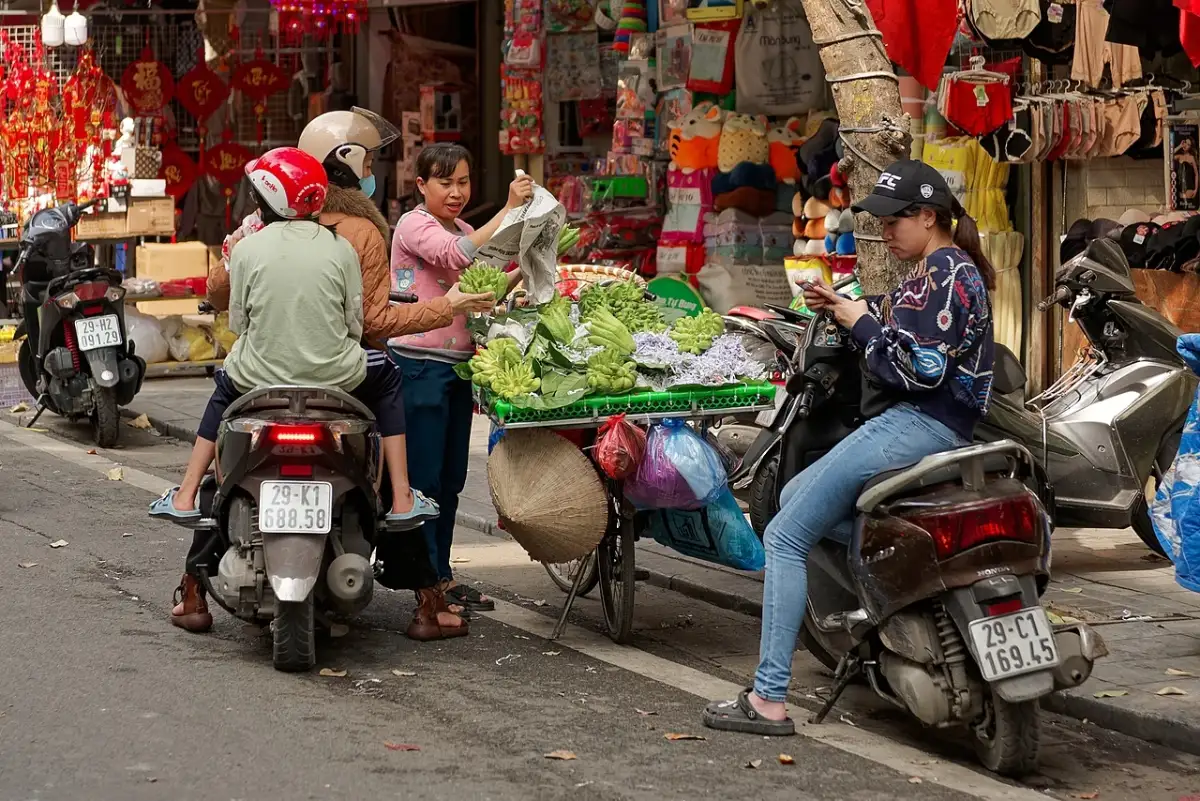
More photos: Street seller of fingered citrons in Old Town of Hanoi by Jakub Hałun, CC BY 4.0; Hanoi Street Food by Surya Santoso, CC BY 3.0. Via Wikimedia Commons.