You no longer need to queue at a ticket office to ride the bullet train. Japan’s rail companies all sell Shinkansen tickets online in English, but each one covers different lines. Here is which to use and how it works.
This post contains affiliate links. We may earn a commission if you book through them. How we make money.
Quick answer
For Tokyo, Kyoto, Osaka, Hiroshima and Fukuoka, use SmartEX: book in English with a foreign credit card, then board with a QR code or by tapping a linked IC card. For lines north and west of Tokyo (Tohoku, Hokuriku, Joetsu), use JR-EAST Train Reservation. Booking normally opens one month before travel. If you have big suitcases, you must reserve an oversized-baggage seat on the Tokyo–Osaka–Fukuoka line.
Which site for which line
| Service | Shinkansen lines | Example routes |
|---|---|---|
| SmartEX | Tokaido, Sanyo, Kyushu | Tokyo–Kyoto–Osaka–Hiroshima–Hakata–Kagoshima |
| JR-EAST Train Reservation | Tohoku, Hokkaido, Yamagata, Akita, Joetsu, Hokuriku | Tokyo–Sendai, Tokyo–Kanazawa, Tokyo–Niigata |
| JR-WEST Online Train Reservation | Sanyo, Hokuriku and JR West limited expresses; JR West passes | Osaka–Okayama, Kanazawa–Tsuruga, Haruka airport express |
| Resellers such as Klook | Main routes | Tokyo–Kyoto, Tokyo–Osaka |
Most visitors only need SmartEX, because the classic Tokyo–Kyoto–Osaka–Hiroshima route is on the Tokaido and Sanyo lines. If you have a JR Pass, reserve seats on the official JR Pass website or at a station ticket machine instead.
Booking with SmartEX, step by step
- Create a free account on the SmartEX website or app. You need an email address and a credit card; you must be 18 or over.
- Check your card. Visa, Mastercard, JCB, American Express, Diners and Discover are accepted, but the card must be enrolled in 3-D Secure (the extra verification step from your bank). Debit and prepaid cards are often declined.
- Search your route and date. Choose stations in English, for example Tokyo to Kyoto. Sales normally open one month before the travel date.
- Pick your train and seat. You can choose ordinary or Green Car, window or aisle, and see a seat map. Seat E (right side, heading west from Tokyo) has the best chance of a Mt Fuji view.
- Pay. You receive a confirmation and a QR code in the app or by email.
Changes are free before departure on regular fares, as many times as you like. Cancellation costs a small fee.
How to board
SmartEX gives you three ways to get through the gate:
- QR code: scan the code in the app or email at the gate. This is the simplest option and needs no paper ticket.
- IC card: link your Suica, PASMO or ICOCA (or Suica in Apple Wallet) to the booking, then tap it at the Shinkansen gate. Each passenger needs their own card.
- Paper ticket: collect it at a Shinkansen ticket machine with the card you paid with and your booking code.
If you started your trip on a local train with your IC card, tap the same card at the Shinkansen transfer gate; the local fare and the Shinkansen ticket are both handled.
JR East and JR West sites
JR-EAST Train Reservation (the English version of eki-net) covers Shinkansen north and northwest of Tokyo, including Sendai, Aomori, Akita, Niigata, Nagano and Kanazawa. Booking opens one month ahead. You can link an IC card as a ticketless “Shinkansen e-ticket”, or collect paper tickets at JR East machines with your booking details. Discover cards are not accepted.
JR-WEST Online Train Reservation covers JR West routes, including the Sanyo and Hokuriku Shinkansen, the Haruka airport express and the Thunderbird to Kanazawa, plus JR West regional passes. Tickets are usually collected at listed stations using the card you paid with.
The Hokuriku Shinkansen between Tokyo and Kanazawa is run jointly by JR East and JR West, so you can book it on either site.
Prefer to book with a reseller?
Some sellers offer Shinkansen tickets with English support and e-tickets.
Luggage rules
On the Tokaido, Sanyo and Kyushu Shinkansen, bags with total dimensions (height + width + depth) of more than 160 cm and up to 250 cm need a reserved “seat with oversized baggage area”. It costs nothing extra over a regular reserved seat, but if you board without one you pay a ¥1,000 fee and must move to the luggage area. Bags over 250 cm are not allowed. A typical large suitcase for checked baggage is around 158 cm, so check yours.
Smaller suitcases fit in the overhead racks or the luggage shelves at the end of some cars. If you have two or more large bags, consider luggage forwarding instead: hotels send them to your next hotel for about ¥2,500 per bag.
How to save money
- EX Hayatoku fares: SmartEX has early-booking discounts, such as Hayatoku 21 for bookings at least 21 days ahead. They save roughly 10 to 20 percent on some trains and routes, but cannot be changed.
- Choose Hikari over Nozomi if you are using a JR Pass, which covers Hikari without a supplement.
- Buy an unreserved ticket on quieter days to save around ¥500 to ¥900 and sit in the unreserved cars, but avoid this on weekends and holidays.
- Compare with the JR Pass. For most one-way Tokyo–Kyoto trips, single tickets are cheaper. See is the JR Pass worth it.
Tips and common problems
- Card declined? Make sure 3-D Secure is set up, try another card, or book at a station ticket machine, which accepts foreign cards and has an English menu.
- Peak periods: during Golden Week, Obon and New Year, Nozomi trains on the Tokaido line can be all reserved. Book as soon as sales open. See our Golden Week guide.
- Missed your train? With a regular reserved ticket, you can usually ride the unreserved cars of a later train on the same day. Discount fares may not allow this.
- Screenshot your QR code in case your phone has no signal at the station.
Booking online takes about five minutes once your account is set up, and it means you can walk straight to the platform. For the rest of your transport, see our guide to IC cards like Welcome Suica.
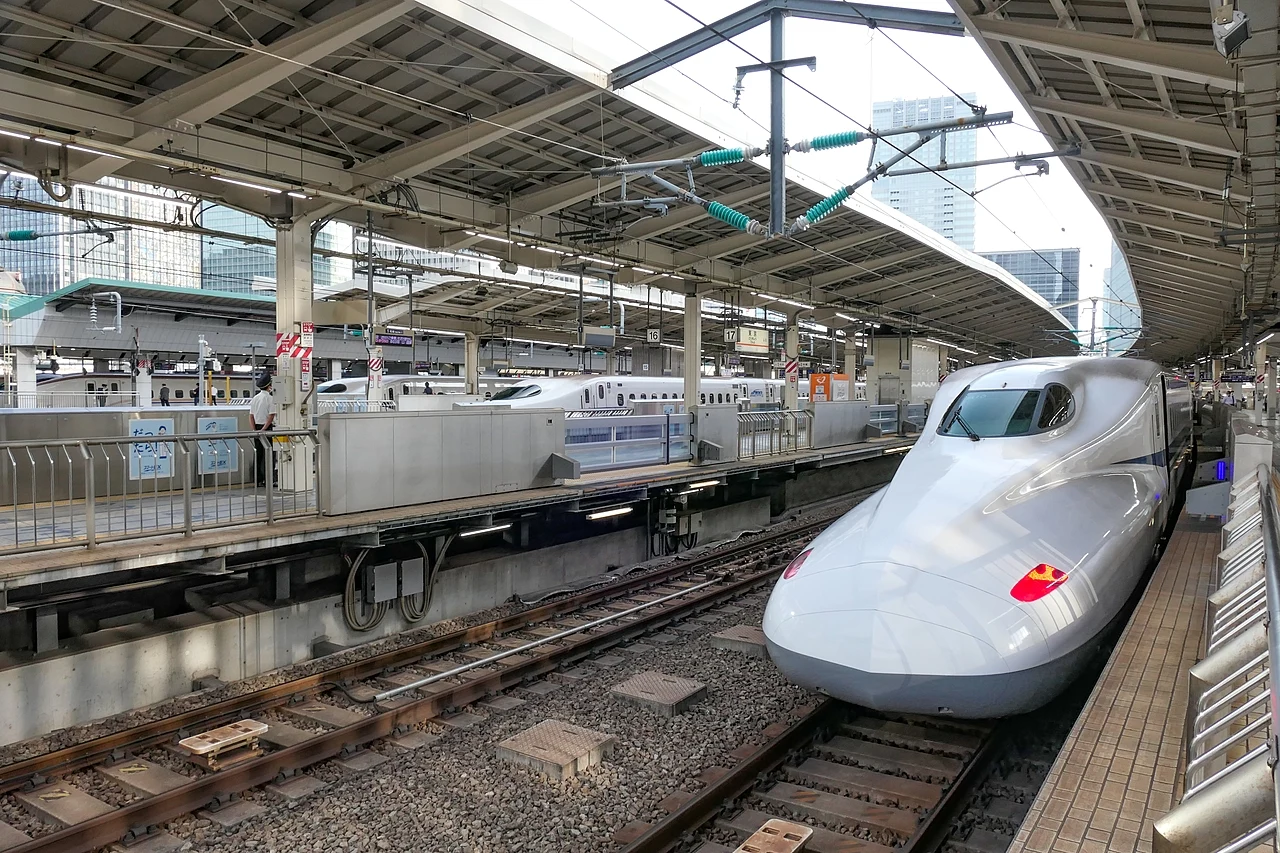
Photo: Shinkansen at Tokyo Station by MaedaAkihiko, CC BY-SA 4.0, via Wikimedia Commons.
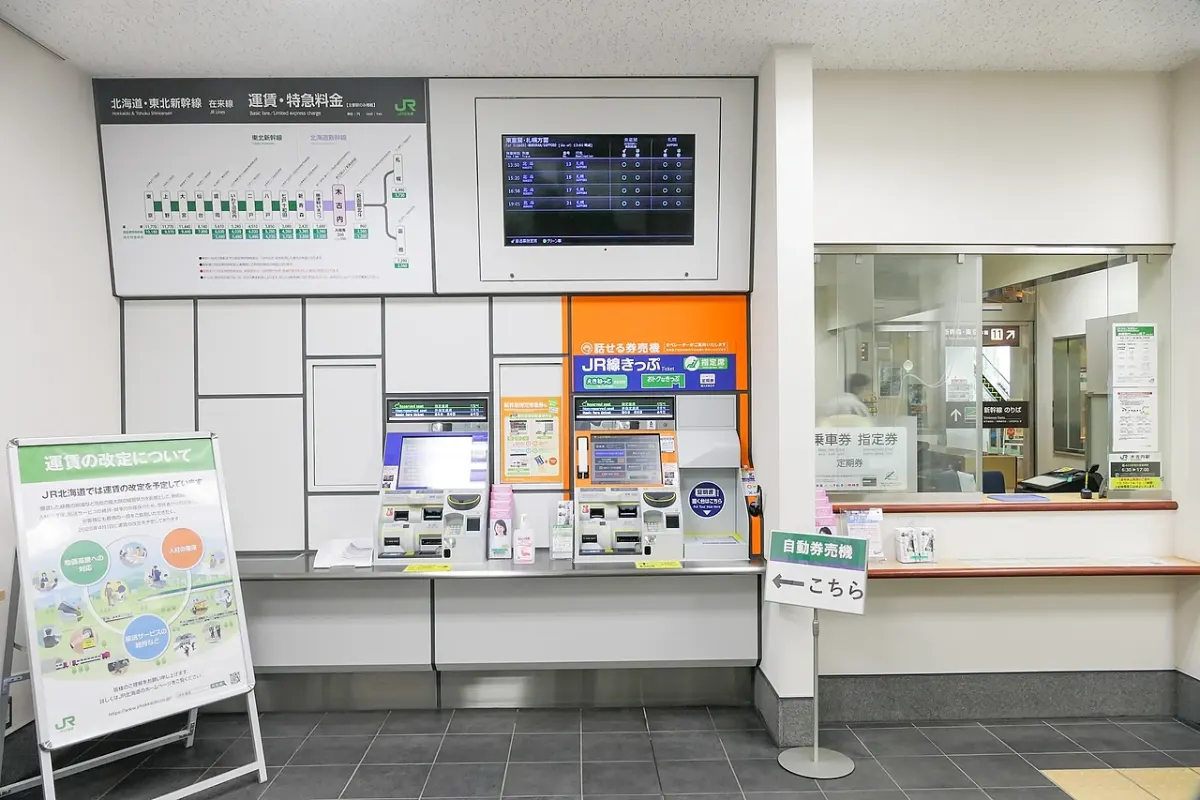
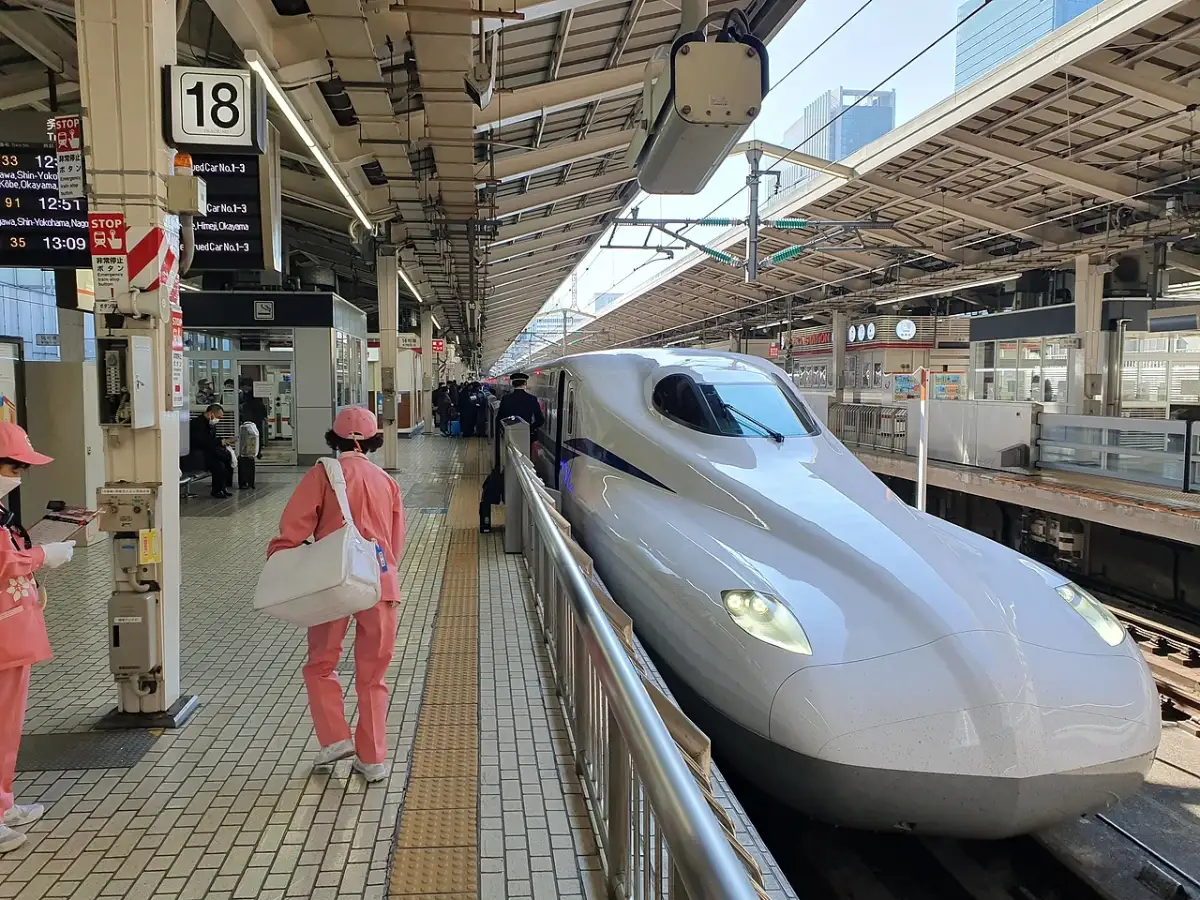
More photos: JR Hokkaido Kikonai Station shinkansen ticket office by MaedaAkihiko, CC0; Shinkansen platform at Tokyo Station by Syced, CC0. Via Wikimedia Commons.