Three days is the sweet spot for a first visit to Kyoto: two full days for the city’s great temples and districts, and one for Nara, Japan’s ancient capital, 45 minutes away.
This post contains affiliate links. We may earn a commission if you book through them. How we make money.
Quick answer
Day 1: Fushimi Inari at sunrise, Kiyomizu-dera, the old lanes of Higashiyama and Gion at dusk. Day 2: Arashiyama’s bamboo grove and gardens, then Kinkaku-ji and Ryoan-ji. Day 3: Nara’s deer park, Todai-ji and Kasuga Taisha, back in Kyoto for Nishiki Market and Pontocho. Stay near Kyoto Station or in central Kyoto, and use trains and taxis rather than the crowded city buses.
The plan at a glance
| Day | Morning | Afternoon | Evening |
|---|---|---|---|
| 1 | Fushimi Inari, Tofuku-ji | Kiyomizu-dera, Sannenzaka, Kodai-ji | Yasaka Shrine, Gion, Pontocho |
| 2 | Arashiyama bamboo, Tenryu-ji, Okochi Sanso | Kinkaku-ji, Ryoan-ji | Kamo River, Kiyamachi |
| 3 | Nara Park, Todai-ji | Kasuga Taisha, Naramachi | Nishiki Market area, Pontocho |
The order matters less than the timing. Visit the most famous sights first thing in the morning, when they are calm, and the old streets in the evening, after the day-trippers leave.
Day 1: Fushimi Inari, Higashiyama and Gion
Fushimi Inari Taisha (7–9 am): take the JR Nara Line two stops from Kyoto Station to Inari. The shrine never closes, and early morning is the best time to walk through its tunnels of thousands of vermilion torii gates. Climb at least to the Yotsutsuji crossroads for the view over the city, about 45 minutes up.
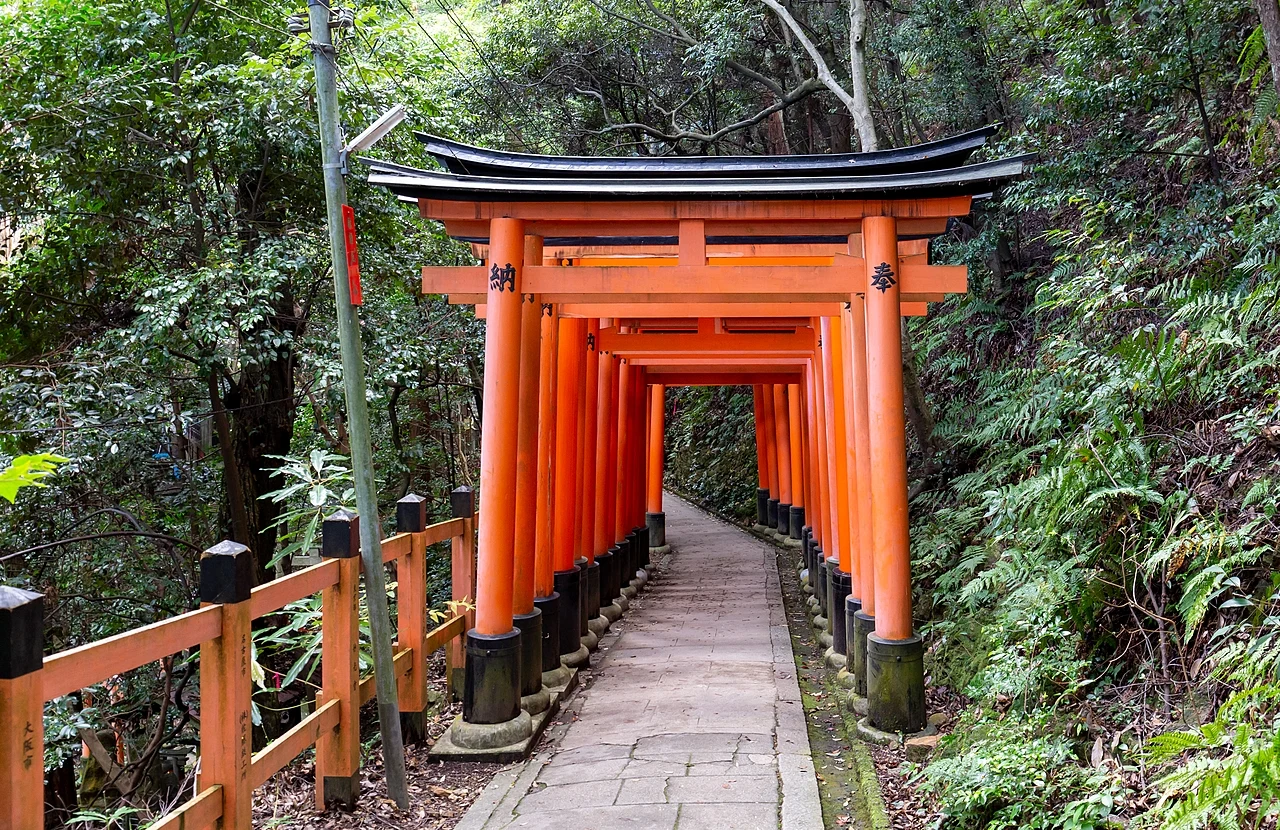
Tofuku-ji (9:30–10:30 am): one stop back toward Kyoto, this Zen temple has striking modern gardens of moss and stone, and a famous wooden bridge over a maple valley.
Kiyomizu-dera and Higashiyama (11 am–4 pm): take a taxi to Kiyomizu-dera, whose wooden stage juts out over the hillside. Walk down through the preserved lanes of Sannenzaka and Ninenzaka, stopping for lunch and matcha sweets. Continue to Kodai-ji, a temple built by the widow of Toyotomi Hideyoshi, with a small bamboo grove and lovely gardens.
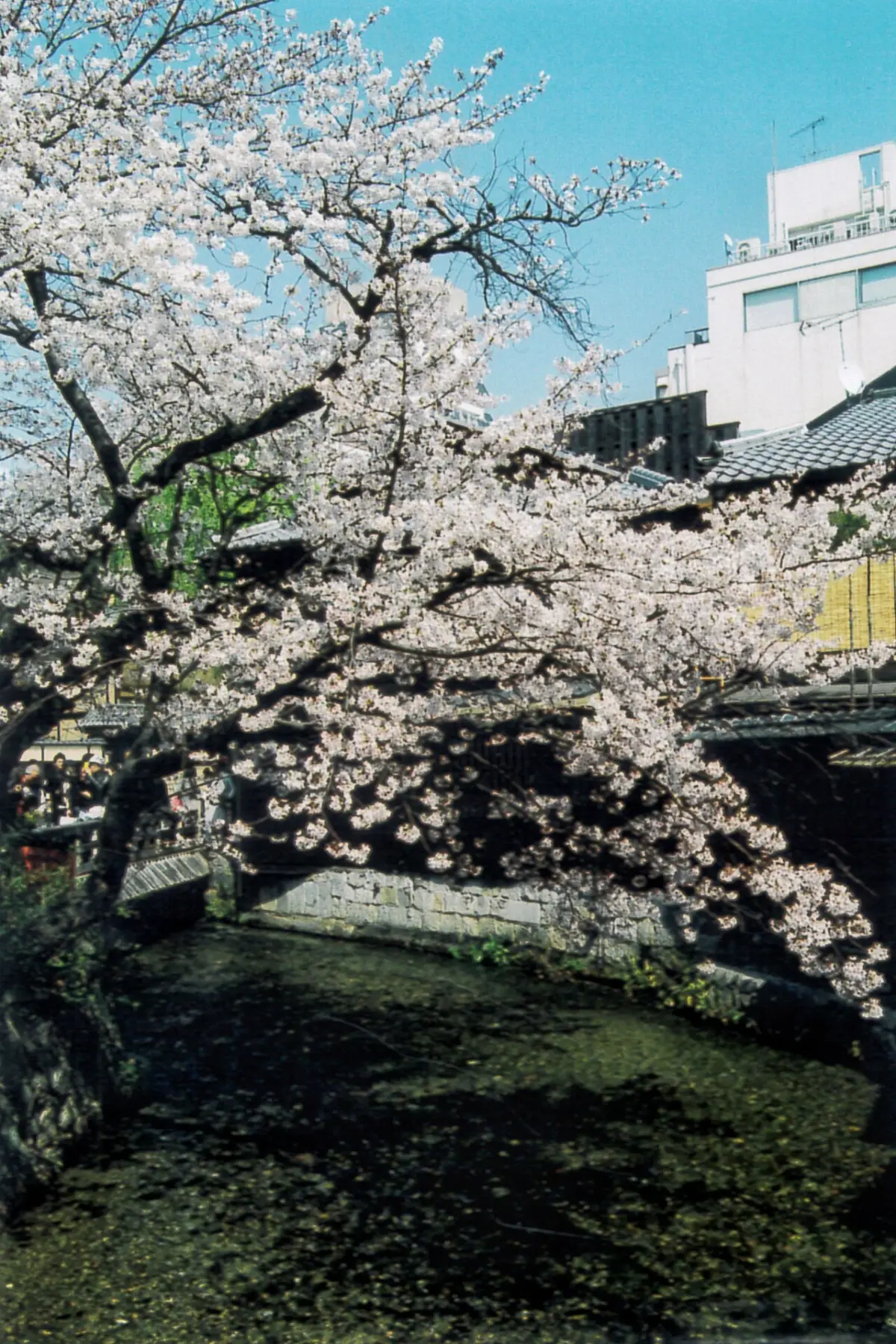
Gion and Pontocho (5 pm onward): walk through Maruyama Park to Yasaka Shrine, then into Gion. Hanamikoji Street and the Shirakawa canal are at their most atmospheric as the lanterns come on. Have dinner in Pontocho, a lantern-lit alley along the Kamo River. Please respect the rules: no close-up photos of geiko and maiko, and no entering private lanes.
Day 2: Arashiyama and the Golden Pavilion
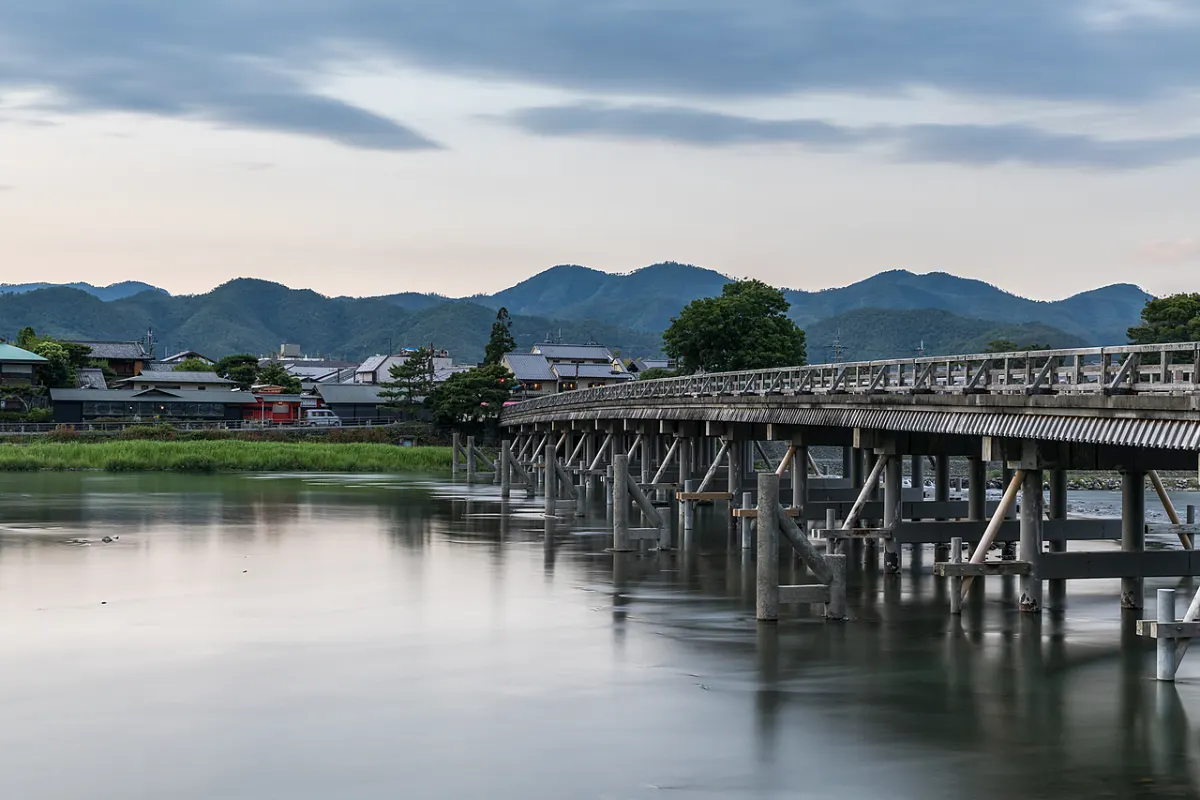
Arashiyama (7:30–11:30 am): take the JR Sagano Line from Kyoto Station to Saga-Arashiyama, about 15 minutes. Walk the bamboo grove early, before the crowds. Tenryu-ji opens at 8:30 am; its garden pond and borrowed mountain scenery are a UNESCO World Heritage site. Okochi Sanso, at the far end of the grove, has hilltop gardens and includes a bowl of matcha. Cross the Togetsukyo Bridge and, if you like, climb to the Iwatayama Monkey Park for a view over the city.
Lunch: try yudofu (simmered tofu), Arashiyama’s specialty, or grab street snacks near the station.
Kinkaku-ji and Ryoan-ji (1–4 pm): a taxi to the Golden Pavilion takes about 20 minutes. Its gold-leaf-covered upper floors reflect in the pond on a sunny day. Walk 20 minutes to Ryoan-ji, home to Japan’s most famous rock garden: 15 stones on raked gravel, arranged so you can never see all of them at once.
Evening: take it easy. Walk along the Kamo River, where locals sit by the water at dusk, and have dinner around Kiyamachi or Sanjo.
Day 3: Nara
Take the Kintetsu line from Kyoto Station to Kintetsu-Nara, 35 to 45 minutes, leaving by 8:30 am. From the station, walk into Nara Park, where more than a thousand deer roam freely and bow for crackers.
- Todai-ji: one of the world’s largest wooden buildings, housing a 15-meter bronze Buddha from the 8th century.
- Kasuga Taisha: a vermilion shrine reached through a forest path lined with thousands of stone lanterns.
- Naramachi: the old merchant district, with wooden houses, cafes and craft shops.
Be back in Kyoto by mid-afternoon. Walk through Nishiki Market, a covered street of food stalls known as “Kyoto’s kitchen”, before it closes around 5 or 6 pm, then spend your last evening in Pontocho or Gion. Our Nara day trip guide has the full route and deer etiquette.
Rather have a guide in Nara?
Half-day and full-day tours from Kyoto include Todai-ji and Kasuga Taisha.
Swaps and extras
- Prefer tea to deer? Swap Nara for Uji, 20 minutes from Kyoto, home of the Byodo-in temple pictured on the ¥10 coin and some of Japan’s best green tea.
- More temples: add the Philosopher’s Path, Ginkaku-ji and Nanzen-ji on the afternoon of Day 1 instead of Kodai-ji.
- Want an overnight experience? Spend one night in a traditional ryokan. See our guide to Kyoto ryokan under $300.
- Only two days? Follow our 2 days in Kyoto itinerary and skip Nara.
- Traveling with kids? Add the Kyoto Railway Museum near Kyoto Station, and expect them to love the deer.

Getting around, tickets and where to stay
Transport: use an IC card for JR, subway and Kintetsu trains. For the gaps, taxis are fast and, for three or four people, often as cheap as the bus. Kyoto’s city buses are slow and very crowded; if you do use them, avoid the main tourist routes at midday.
| Item | Cost |
|---|---|
| Trains (Inari, Arashiyama, Nara round trip) | About ¥2,500 |
| Temple and shrine entry, 3 days | About ¥4,000–¥6,000 |
| Taxis (shared) | About ¥2,000–¥4,000 |
| Food | About ¥5,000–¥8,000 a day |
Where to stay: near Kyoto Station for easy trains to Inari, Arashiyama and Nara; central Kyoto (Karasuma or Kawaramachi) for restaurants and evenings out; Gion for atmosphere. Our where to stay in Kyoto guide compares them.
Three days will not show you all of Kyoto, but it will show you why so many people come back. Keep your mornings early and your evenings slow, and you will see the city at its best.
Photos: Fushimi Inari torii gates by Balon Greyjoy, CC0; Tatsumi Bridge, Kyoto by Kirin7739, CC0; Philosopher’s Path by shankar s., CC BY 2.0. All via Wikimedia Commons.
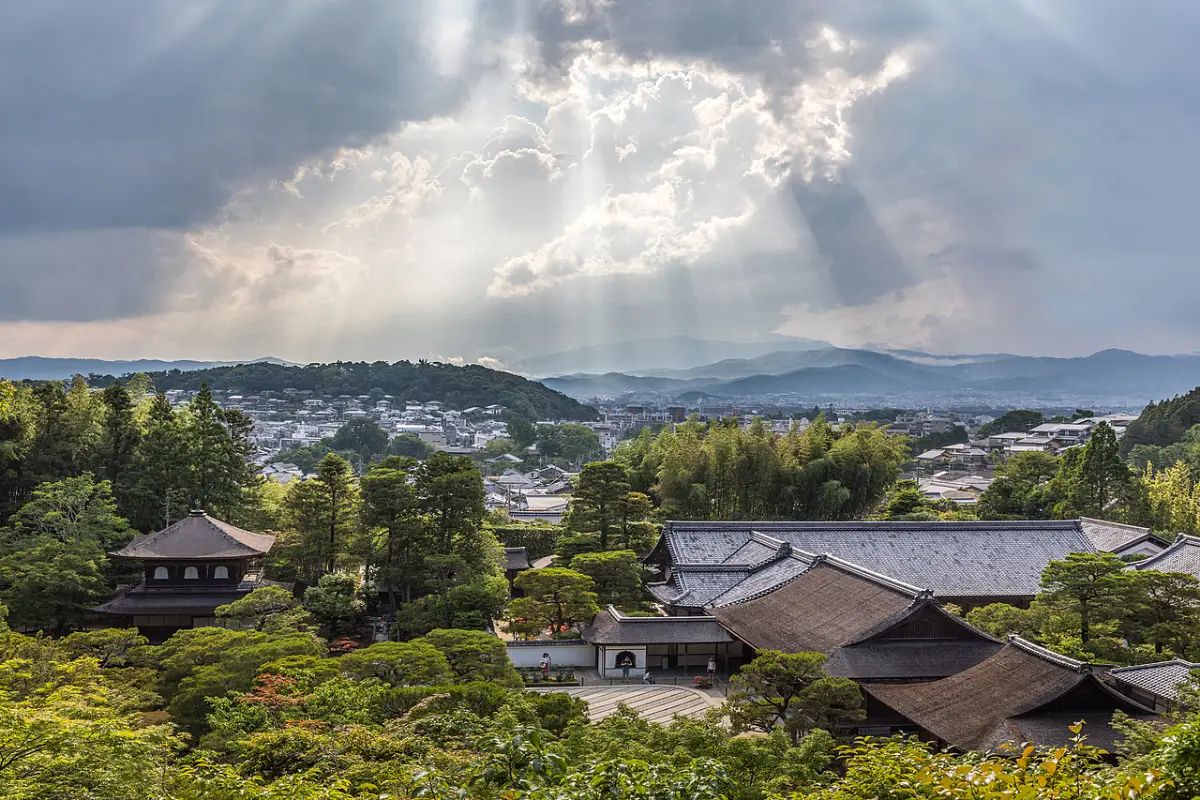
More photos: View of Ginkaku-ji Temple from above, Kyoto by Basile Morin, CC BY-SA 4.0; Togetsu-kyo bridge at dusk, Kyoto by Basile Morin, CC BY-SA 4.0. Via Wikimedia Commons.